Advertisement
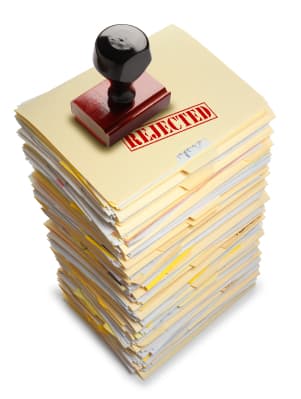
Weekly Wrap: It’s Sad We Don’t Send Out Rejection Letters Anymore

Get articles like this
in your inbox
The longest running and most trusted source of information serving talent acquisition professionals.
Advertisement
Related Articles
Everyone should have the experience of getting a few rejection letters sometime in their lives.
I was thinking about this today because, a) I have gotten my fair share of them over the years; and, b) I was amused by this recent blog post in Mental Floss about 10 Rejection Letters Sent to Famous People.
Just the names of the people who got these rejection letters should make you sit up and take notice: Bono, Andy Warhol, Madonna, Kurt Vonnegut, Tim Burton, Steig Larsson (author of The Girl with the Dragon Tattoo and the Millennium trilogy), and Hunter S. Thompson, among others.
I’m always amused by rejection letters because they seem to reconfirm what we already know — that people who are paid to assess and measure talent frequently get it very, very wrong.
That’s especially true of people who have talents that are groundbreaking or that don’t easily fit into current concept of what will be successful. This was on display just last month in all the hoopla over the 50th anniversary of the Beatles coming to America in a roundup the Los Angeles Times published of what critics had to say about them in February of 1964.
Here are a few examples:
Yes, people who evaluate talent frequently and repeatedly get it so wrong that you wonder how they manage to keep their jobs. And, the Mental Floss article just simply makes this point again by showing us how people who we know today to be great talents got rejected, too.
But there was something else that jumped out at me from this article: who actually gets a real, live rejection letter any more?
Yes, I know it would probably be a rejection email today, and even those can sometimes go terribly wrong, but for the most part, people today get no rejection at all — no letter, no email, no nothing.
In fact, job applicants are lucky if they even get an acknowledgement that they applied for a job, much less a rejection.
Gerry Crispin and Mark Mehler, who run Career Xroads, have researched this for years, and the sad fact of the matter is that their work shows that 75 percent of the companies on Fortune‘s 100 Best Companies to Work For list don’t even bother to tell job applicants if they are even being considered for a job they applied for.
In other words, as bad as the people evaluating talent may be in doing their job, they (and their organizations) make it worse by not even being courteous enough to respond to those who took the time to apply.
Yes, Corporate America really stinks at responding to job candidates.
Say what you will about the old-fashioned rejection letter, but it actually showed some degree of civility in giving applicants a final answer about their status. On top of that, rejection letters frequently fuel the recipient to work that much harder to do what they need to do so that they don’t get rejected the next time.
My guess is that some of those featured in 10 Rejection Letters Sent to Famous People reacted in that very way, and probably now view such letters as part of the fuel that lit their fire of success.
We’re a lot worse off today by taking that old-fashioned rejection letter out of the process.
And one more thing: the letter listed for gonzo journalist Hunter S. Thompson was actually a letter he wrote back to William McKeen, who was the author of a biography of Thompson. The response from Thompson is such that I thought it worth repeating here:
McKeen, you s**t-eating freak. I warned you about writing that vicious trash about me.
Now you better get fitted for a black eyepatch, just in case one of yours gets gouged-out by a bushy-haired stranger in a dimly-lit parking lot. How fast can you learn Braille?
You are scum.
HST
Of course, there’s more than rejection letters in the news this week. Here are some HR and workplace-related items you may have missed. This is TLNT’s weekly round-up of news, trends, and insights from the world of talent management. I do it so you don’t have to.
