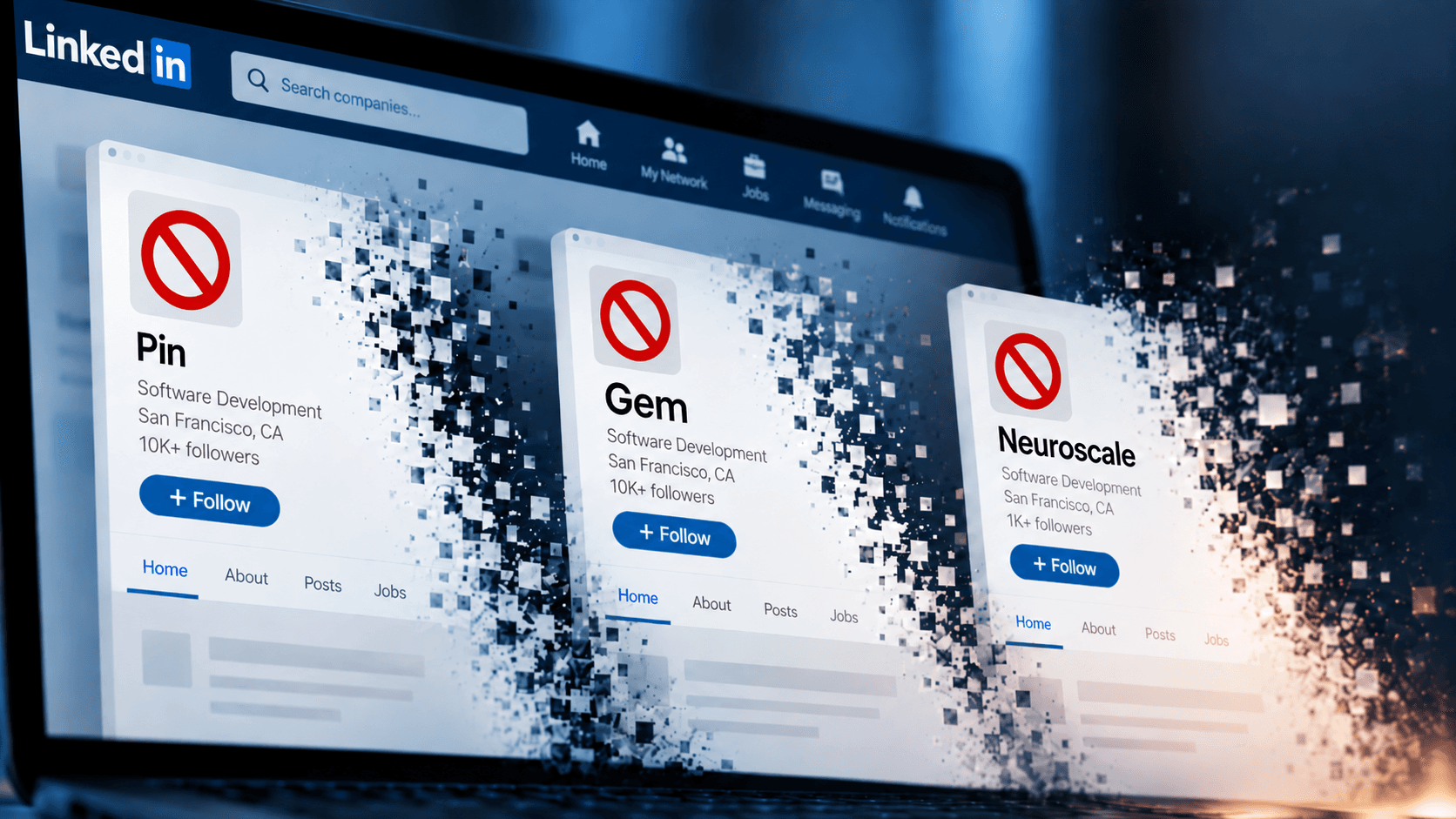
The company pages for Pin, Gem and Neuroscale have disappeared from LinkedIn, and as of Oct. 13, visitors to those pages get LinkedIn’s “Page not found” message. Pin CEO Steve Lu’s personal profile has been gone from the platform for more than a month.
Asked about the page removals, a LinkedIn spokesperson said “LinkedIn takes action when necessary to prevent our members’ information from being scraped and used without their consent.”
Pin is the only one of the three to address the removal publicly. In a Sept. 12 blog post, Lu wrote that Pin’s company page and his profile “are currently unavailable.” He added: “LinkedIn’s team raised concerns about our presence on their platform. We are working with them to resolve it.”
Four days later, Pin published a longer update featuring a video with an AI-generated “new HD version” of Lu. “To be clear, LinkedIn doesn’t get to determine who’s in business or not,” he said in the video. He warned that customers might hear from competitors that Pin was shutting down, calling that “simply not true.” Pin says the product remains fully operational.
Gem’s company page was gone by late September. “We’re aware of the actions and are working with LinkedIn to resolve them,” Gem said in an emailed statement. “Our customers’ partnerships with Gem and/or LinkedIn remain unaffected.”
Neuroscale, which launched its Arbi recruiting platform in July, lost its page in early October.
Some recruiting teams that use these and similar tools are concerned about facing similar repercussions, but it’s unclear exactly what lines were crossed. None of the affected companies that I spoke to was willing to disclose exactly why it was removed, and some even expressed confusion. They were also unwilling to be quoted by name beyond their public comments because they are engaging with LinkedIn to try to get their pages reinstated.
LinkedIn’s User Agreement lists a range of prohibited conduct, including using “crawlers, browser plugins and add-ons” to scrape the site, bots to access the service or send messages, and using information obtained from LinkedIn “through third parties (such as search tools or data aggregators or brokers)” without the content owner’s consent.
LinkedIn’s spokesperson declined to say which policy had been violated or what member information had been scraped.
The removals come amid a tougher environment for sourcing platforms. After years of AI-fueled expansion, venture capital funding for sourcing tools has gotten harder to raise, and the sourcing market has begun to consolidate. On Oct. 6, Juicebox announced an agreement to acquire intellectual property and other assets from Fetcher, a sourcing and recruiting automation platform that is winding down its operations. (Full disclosure: Juicebox is a sponsor of the ERE Recruiting Innovation Summit.)
At its Talent Connect conference on Sept. 29, LinkedIn announced Hiring Assistant 2, expanding its own agentic recruiting business. The company also reported that its agentic hiring products have passed a $450 million annualized revenue run rate. Pin, Gem and Neuroscale all sell tools that compete for the same recruiting budgets.