Fraud has become one of the fastest-growing pain points in talent acquisition. In recent months, I have written about it largely from the employer perspective, and it will also be a major topic at the ERE Recruiting Innovation Summit, where Stacy Zapar will lead a session on candidate fraud and what recruiting teams can do about it. We are also hosting a virtual Ask Me Anything with Stacy on the topic on August 11.
Like the proverbial blind men feeling different parts of an elephant, employers and candidates encounter very different forms of fraud in the hiring process. Talent acquisition sees fraudulent applicants and doctored profiles. Candidates see fake recruiters, misleading listings, and “ghost jobs.” Trust is eroding across the board.
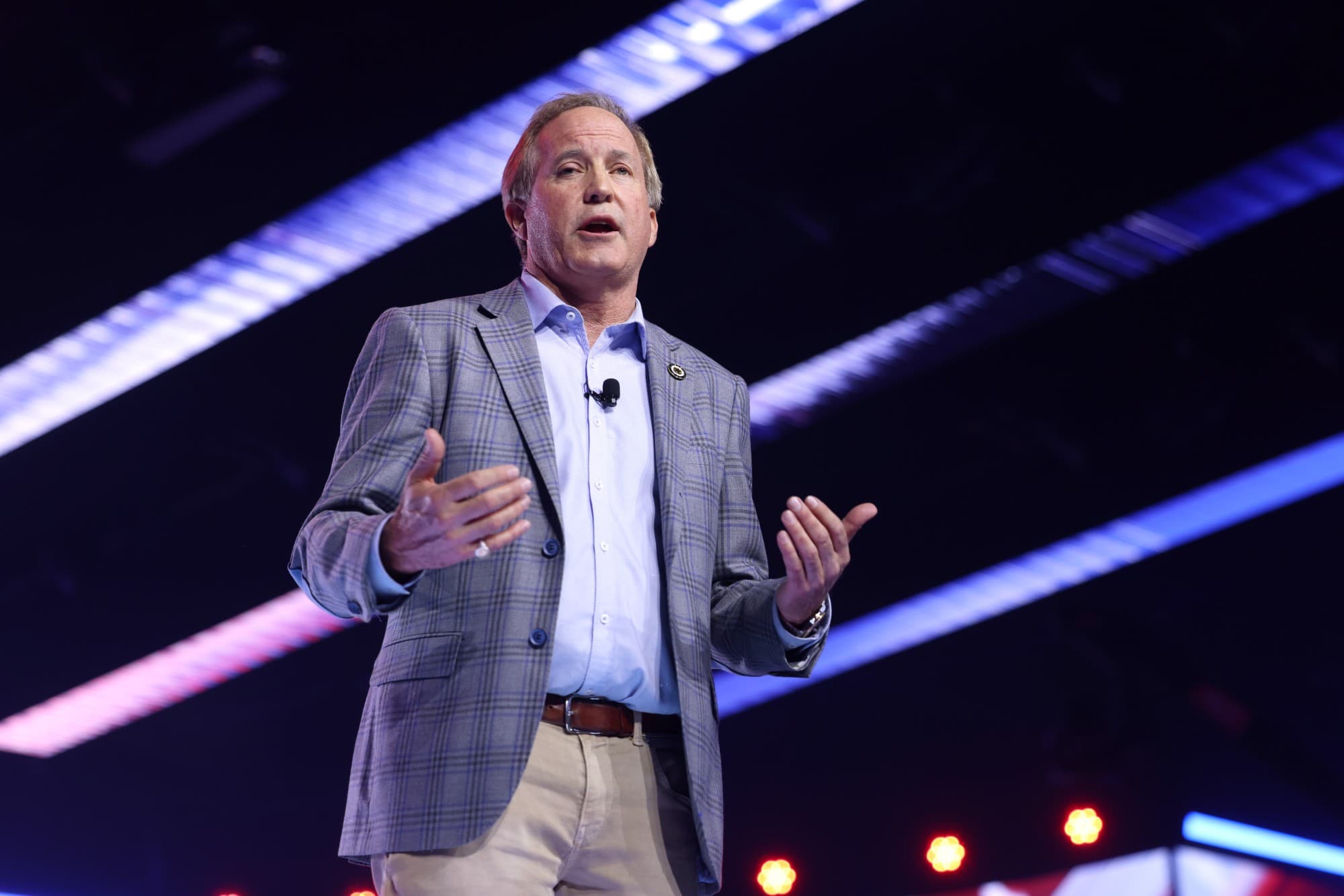
On July 14, Texas Attorney General Ken Paxton opened an investigation into whether LinkedIn misled job-seekers who pay for LinkedIn Premium Career by advertising ghost jobs.
Paxton’s office issued a civil investigative demand seeking documents, data, and internal communications about LinkedIn’s marketing, job-verification practices, Premium subscriptions, and representations about its job listings.
Politically, this is a winner. Looking for a new job is one of the most frustrating things that many people do in their lives, and ghost jobs have become a convenient boogeyman for a process that often feels arbitrary and opaque.
The “ghost job” label lumps together legitimate postings, honest mistakes, and outright fraud
The attorney general defines a ghost job as a listing that does not correspond to an actual opening or is posted even though the employer has no immediate intention of filling the position.
That definition sounds precise, but job-seekers are increasingly using the term ghost job to describe many different kinds of postings that frustrate them, even when they are very different scenarios.
Many of these postings are for legitimate jobs, such as evergreen postings for recurring hiring or pipeline ads for anticipated openings. Others are honest mistakes or process failures, including roles that have already been filled, frozen requisitions that were never removed, and duplicated or poorly syndicated listings. Then there is outright fraud, such as employment scams or third-party recruiters collecting candidate information without an active assignment.
An evergreen posting may support hundreds or thousands of real hires without corresponding to one immediate vacancy. A company may recruit ahead of a seasonal hiring period. A role may be placed on hold after being advertised because the budget or business need changed.
Those listings may be confusing or even badly managed. That does not make them fraudulent. “Ghost jobs” may turn out to be a politically powerful phrase because it taps into a very real source of rage and frustration, but I don’t see this going far legally.
Fake employees create a credibility problem for employers
On the employer side, Monika Michalak recently shared that hundreds of fake profiles had associated themselves with 8Bit, her eight-person company. She documented the count rising from more than 10 accounts to more than 100, then 150, 200, and eventually a peak of 263. Many of the profiles used sexualized images of women.
At the peak, Michalak calculated that more than 97% of the people displayed as employees of the company were fake.
8Bit spent six weeks reporting the profiles, escalating the matter through its account manager, providing screenshots, completing verification requirements, and working with LinkedIn’s Trust and Safety and engineering teams. The accounts were finally removed after her post gained attention and LinkedIn’s Executive Escalations Team contacted her.
I’ve had the same problem here at ERE Media. We are a three-person company that currently has 603 people associated with our organization, and the vast majority of them are fake.
There’s no way for me to disassociate from the fake profiles, and I’ve been reporting them to LinkedIn for years. I even raised the issue directly to Dan Shapero, now LinkedIn’s CEO, when I saw him at LinkedIn’s Talent Connect Summit last year. He was polite, especially considering that a stranger had just told him that his product had a problem. He took a screenshot for his product team, but it’s only gotten worse since.
“AI slop” is making it harder to trust your connections
LinkedIn has positioned itself as a source of trusted business information in an environment where it is getting increasingly difficult to tell what is real, but we’ve all been seeing more updates, comments, and professional advice that are generated largely or entirely by AI.
The overall volume of original posts has risen by 14% year over year, and LinkedIn has acknowledged the rise of AI slop. The company says it is reducing the distribution of generic AI-generated material, but my personal experience is that this is getting worse, not better. You can’t hold back the tide.
We look to our connections on LinkedIn for their expertise, but it’s hard to trust that expertise when we cannot tell whether the person posting has done the work, holds the opinion, or even read what appears under their name.
That creates an awkward tension for a platform working hard to position itself as a source of trustworthy professional information. A verified identity does not necessarily produce a genuine point of view.
Can trust in hiring be rebuilt?
The ghost-job investigation, fake employee profiles, and the rise of AI slop are three manifestations of the same problem.
Fundamentally, we are questioning what is real and whom we can trust.
This is not just a LinkedIn problem—the company is the focus here because it is the 800-pound gorilla in the recruiting industry. The company has made some smart moves to strengthen trust, particularly introducing verified profiles, but the broader credibility problem is still there.
Photo by Gage Skidmore. Licensed under the Creative Commons Attribution-Share Alike 4.0 International license.