Advertisement
The Art of Management and Dealing With Unresolved Issues

Get articles like this
in your inbox
The longest running and most trusted source of information serving talent acquisition professionals.
Advertisement
Related Articles
Sometimes, the greatest wisdom and advice about managing people comes from the most unexpected places.
So it was for me this weekend reading the Corner Office column in The New York Times. Jack Dangermond,who was identified as the founder and president of Esri, a company that offers geographic information systems, was talking about working in his family’s plant nursery business as a 16-year-old.
Here’s what he had to say. See if his management insight jumps out for you like it did for me:
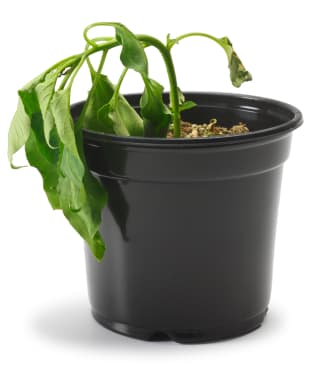
I also remember my father and I were once walking through the nursery, and one of the plants was wilting. And he said, “Did you notice something?”
I looked down and realized the plant was wilting. He said: “Don’t ever walk by a wilting plant. Get water on it right away.” Which sort of stuck with me — you inherently have responsibilities to take care of things. In a nursery, if you don’t take care of those plants, your profits get lost real quickly. You have to weed. You have to water. You have to nurture. Also, you have to take care of your employees in such a way that they do the same…
(I’m) showing my own values when there’s a wilting plant. When I see an unresolved issue, I jump in. When I’m walking around our campus, if there’s some trash there, I pick it up. There’s no elitism here and no detail’s too small. In the landscape crew, it was management by leadership. It wasn’t management by, “O.K., you guys do this; I’m going to sit back and watch you.” That style makes me irritated.”
What struck me about what Jack Dangermond had to say was his father’s simple admonition, “don’t ever walk by a wilting plant.”
It’s a great metaphor for anyone managing people, because all too often, managers, executives, and HR professionals decide to let a problem linger and don’t take the time to deal with it. Or, they find some way to avoid it entirely. They would rather “walk by a wilting plant” then take the time to jump in and deal with the issue.
Want some examples of what I mean? How about …
There are probably many other examples of manager avoidance that I could list here — and feel free to leave any off your own — but they all have one thing in common: the inability of a manager to handle a visible managerial issue that is right in front of their face.
Yes, it’s the management equivalent of avoiding that wilting plant, and how many of you know of someone who operates this way?
Jack Dangermond has it right; you don’t ever walk by a wilting plant, especially if you are a manager, because managers ALWAYS have those inherent responsibilities to take care of.
He learned this lesson at age 16, and it stuck with him forever, but some others never learn it at all. How many managers do you know like that?