Advertisement
Performance Management: What HR Should Learn from Football
Get articles like this
in your inbox
The longest running and most trusted source of information serving talent acquisition professionals.
Advertisement
Related Articles
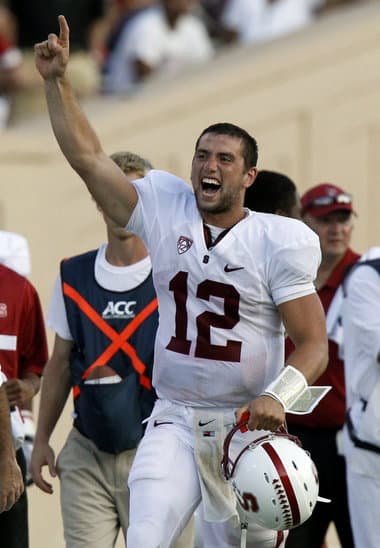
Last week’s annual NFL draft reminds us that effective performance management practices are demonstrated in live action every weekend in the fall. Football games, both pro and college, exemplify a number of lessons on how to bring the best performance from people.
Selection as well as ‘promotions’ (to starting positions) focus on demonstrated capabilities associated with success. There is strong but healthy competition to be the best in each “job.” The “managers” work closely with players to help them develop their skills and play at the highest level. There is a heavy emphasis on recognizing and rewarding the best performers.
They all play football but “work” in different positions requiring distinctly different skills and abilities. Most of us as fans could identify the key competencies required for success at each position. There are no doubt a few core competencies – teamwork is obvious – but each position has distinctly different responsibilities and job success depends on developing the skills needed at the position.
Teams recognize the need for job or position specific skills and support skill development with a long list of specialized coaches. Pro teams have 15 to 18 coaches. There is always a coach for the quarterbacks, another for running backs, etc.
Coaches provide ongoing feedback throughout each game, and of course during practice sessions. Obviously, however, the players play the game. Coaches stay on the sidelines.
They also evaluate player performance, using position specific performance data. At year end those ratings are linked to tangible and intangible rewards. The media carries endless articles comparing player performance at each position; even the stars are subject to critical assessments.
Those comparisons remind me of the practice of posting operating results on a wall for everyone to see. The players low on those comparisons naturally want to improve and move up on the lists. The team comparisons are similar to those developed by the investment community.
In the end, of course, winning is a team accomplishment. The locker room scenes for both winners and losers tell us everything about the value of being successful. Despite the significant differences in individual rewards, there is a strong team esprit de corps.
All of that is probably obvious to football fans. It’s taken for granted and never questioned. What is not obvious is the reason why these practices are never questioned in football (or other team sports) but the subject of endless, often contentious debates in HR forums. What is also not obvious is why players accept the open, sometimes disparaging discussions of their performance while it remains an intensely sensitive subject in other sectors.
Would those same practices be effective in the typical organization? Do employees in other sectors differ in their desire to excel, in their need for feedback, or in their desire to be recognized and rewarded for their performance? OK – football players are different ; they’re bigger, stronger etc, etc. But my guess is many of us would be open and responsive to the same level of feedback and coaching in our jobs. And we would also welcome similar challenges and opportunities to excel. Business is about winning and most of us would look forward to celebrations similar to those post-game locker rooms.
The biggest hurdle it seems is the half century of ineffective performance management practices. We are all conditioned by our experience in narrowly defined jobs with little challenge and by close, over-the-shoulder supervision. The simple but difficult change to ongoing feedback and coaching would be welcomed by most employees and contribute to improved performance – as it obviously does in sports.
Now we have a new generation of workers who grew up playing video games with instantaneous feedback and rewards for good performance. It’s time to rethink the way we select, develop and manage employees.
This is not intended to be definitive or even defensible but is offered for debate. If you disagree, I’ll be at the bar watching my Philadelphia Flyers.
Great organizations in every sector are able to maintain that success because of their people. That’s true for companies, hospitals, universities and government agencies. Every employer should have a goal of winning the Super Bowl.