Editor’s Note: Sometimes readers ask about past TLNT articles. That’s why we republish a Classic TLNT post every Friday.
“People who enjoy meetings should not be in charge of anything.” — Thomas Sowell, economist and social theorist.
Meetings may just be the bane of our workplace existence.
I don’t mean events like professional conferences; those generally represent valuable educational experiences. No, I refer to those self-proliferating time-wasters that bring co-workers together to discuss ways to maximize team productivity, but instead accomplish the exact opposite.They seem to expand as time goes by; and when everyone has to have their say, they can drag on for hours, killing productive momentum.
Yes, you need to know why you’re meeting
Yet meetings remain absolutely necessary if organizations expect to meet their strategic goals. The higher you rise in an organization, the more of your time is spent “working” in meetings: making decisions, determining strategic direction, and collaborating with other leaders.
At their best, meetings help us share information, coordinate plans, ensure alignment, maximize limited resources, and spark innovation. To have a productive meeting, you must know why you’re meeting, stick to the agenda, and limit attendance only to those who can contribute.
For example, if you oversee the sales team, and a meeting involves purchasing new software for the corporate accountants, do you need to attend? No. Do you even need to show the flag? No. On the other hand, Fritz the bean-counter may need to attend your quarterly sales meetings if he tracks your department’s costs or net profits.
How to decide who should attend
Use these guidelines to decide how many people should attend, based on meeting type:
- Communicating company strategy. These all-hands meetings can include everyone in the organization, as long as the moderators limit questions and stick to a strict schedule. These meetings often include speeches by thought leaders or subject matter experts.
- Brainstorming. Limit these sessions to 25 people at the most, and consider breakout sessions where smaller sub-groups handle specific topics and report in to the moderator.
- Problem solving/discussion. Fewer than 15 attendees works best here. If you have more people who should participate, especially when company direction is involved, consider breaking into two or more meetings.
- Action planning/alignment. Everyone should have a thorough understanding of the organization’s strategic alignment and their place in it. Smaller is better, especially when seeking buy-in: fewer than 10 attendees on an intact work team works well here. That said, at least inform your entire group about your strategic goals; this feeds back to Item #1 if you lead an especially large team.
- Decision making. This province belongs to execs, and then only to those it directly impacts: CEOs, CFOs, Presidents, Chairmen, Directors, etc. Limit the meeting to six people.
The straight and narrow
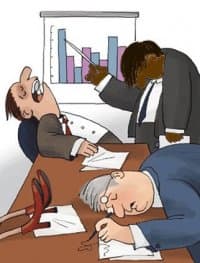
Some people believe that anyone a meeting might possibly affect, even tangentially, should attend. Inoculate yourself against this idea. Otherwise, where will it end? You’ll lose days of wasted time, and half the people who attend the meetings will either doze off or go catatonic before you finish anyway.
When in doubt, decline. Don’t invite people who need not attend. Don’t attend meetings where you have no useful input.
Some observers suggest (half seriously) that you kick out the least valuable attendee anyhow. Apple’s Steve Jobs always kept his meetings small when possible, and wasn’t averse to excusing people if he thought they didn’t belong.
You may want to do the same — they will thank you.
This was originally published on Laura Stack’s The Productivity Pro blog.