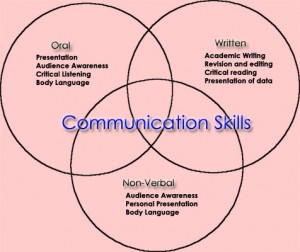
 Without effective, intentional communication, your company won’t thrive. Communication consists of three parts:
- Oral (Verbal)
- Non-Verbal
- Written
Each of these is necessary and they work together in concert. Your communication needs to be consistent from the CEO to the lowest levels of your organization. Without consistent, clear communication you will encounter a multitude of problems within your company. Inconsistent messaging and communication will consequently cause perception problems outside. Do you really want negative publicity running around the country? Here is an example of what I mean. It’s a bit long, but I believe it’s important to tell the whole story so you can see all the mistakes that were made.
Chelsea has just received her bachelor’s degree. She had an internship with a prominent firm in NYC the summer following her sophomore year of school. They liked her so much they invited her back the summer following her junior year. Before she went back to school to complete her senior year she was told by everyone she worked for (including HR) that they wanted to hire her after she graduated, and that she was as good as hired. They told her to reach out early this year, which she did.
The HR person she had dealt with during her internships (Mary) had been promoted and told Chelsea to contact the person who had backfilled her position (Karen). Mary said she’d let Karen know to expect to hear from Chelsea. Chelsea proceeded to email Karen to let her know that she still wanted to come to work for the company and would like to set up an interview. It took three weeks for Karen to respond to the emails (Chelsea sent two more over this time).
After finally hearing back from Karen, Chelsea said that she could be available any Monday or Friday (she was still in school) for an interview. Karen just told her to let her know when she’d be in the city and they’d schedule time to interview. Chelsea made it clear that any Monday or Friday would work. Karen still wouldn’t commit to an appointment to see Chelsea.
This was mid March.
In mid April Chelsea emailed Karen again and then called her three days later. There was no response to either communication. In addition she left a voicemail for Mary (the HR person to hire her for the first internship) to let her know she hadn’t been able to get anywhere with Karen for over a month. Mary got right back to her and told her that Karen was out of the office and would be back at the end of the week.
On Sunday night at 8 p.m. Chelsea received an email from Karen asking her if she could come in to interview with her the next day at 3 p.m.. Chelsea, still very interested in working for this company, rearranged some items and agreed to the interview.
Chelsea met with Karen the following afternoon as planned. This was the first time there was any verbal contact between them. Karen proceeded to tell Chelsea that she could probably tell her more about the position and culture than she was aware of, as she’d only been with the company for a few months.
At the conclusion of the interview Karen informed Chelsea that she was to meet with two account managers for one of the accounts she might be working with, which she did. Chelsea was very concerned about her meeting with the two account managers because, not having been informed of this, she was unable to prepare for the second interview. She did the best she could with no preparation and powered through. As soon as Chelsea got home she emailed thank-you notes to all three people she met with and also hand-wrote notes and mailed them.
Three weeks later Chelsea had still not received feedback of any kind from Karen and sent her an email. Another week went by with no communication from Karen. She emailed Karen again and finally heard back five days later. Almost five weeks had passed between the interview and feedback. Karen said there were no positions they were hiring for (contradictory to what she had been told) at this time but to let her know when she’d be back in New York in case something else came up. Chelsea had made it perfectly clear in one of her prior emails, in which the thread was included, that she would be back in New York full time by May 15. Even so she emailed Karen when she got back to town. Again, no response.
Chelsea was concerned by both Karen’s lack and quality of responsiveness and assumed that this meant she’d blown the interview and they were no longer interested. Her father advised her to contact Mary about what happened and Mary responded that Chelsea needed to do research and be more prepared when she was to meet with the account managers of an account. Chelsea emailed her back immediately and explained that Karen didn’t inform her of the second interview until the end of their interview. Had she known in advance she would have prepared adequately for the second meeting.
Five days later (Sunday night, May 22) Karen sent an email apologizing for not being responsive and asked if Chelsea was available for a call the next morning at 11. Karen asked Chelsea if she could come back into the office on May 24 and meet with a different account team. Needless to say, she was prepared and Karen sent her email quickly asking for 3 references.
I spoke to Chelsea on May 25 and she told me that she had lost almost all interest in the job and was now keen on looking into other options. She felt that everything she had been told about their interest in hiring her was bunk, and told me she’s considering taking the job if they make her the offer but will continue to look for something else.
I’m sure many of you are horrified at this fiasco. I’m shaking my head as I’m writing this because it distresses me so. It’s just so unnecessary to have something like this happen, but it happens all the time. Let me list all the errors:
- Karen’s total lack of response from the initial contact until the request for references two months later is totally unprofessional and disrespectful.
- Karen never once picked up the phone to call Chelsea to have even the most basic of conversations. Every communication was by email. I know everyone is busy. I may be old school, but I firmly believe that we must maintain the art of oral communication. There are just too many things that can be misinterpreted in email as it’s very hard to convey emotion effectively. That isn’t to say that I don’t believe there’s a time and place for email. I use it all the time, but not when oral communication is warranted.
- Karen admitting to Chelsea that she knew less about the company than Chelsea did. Really!? What was she thinking? What was the company thinking? How do you hire any new employee and not make sure they have correct and consistent messaging about you?
- Karen’s lack of interest, professionalism, cognizance, etc. that she wouldn’t set an interview with Chelsea, even though she’d been told any Monday or Friday would work. Chelsea should have made a more concerted effort to actually get Karen to set a time to meet. She should have given Karen 2-3 specific dates that would work for her. Maybe this would have gotten Karen to commit to an interview, though I’m not at all convinced it would have made any difference.
- Karen emailing Chelsea on Sunday nights after 8 p.m. to see if she would be available the following day. Now I get that things can happen at the last minute, periodically. This should not be a usual practice. Also, Karen should have had the common sense to pick up the phone, call Chelsea, and tell her that she knew it was last minute and make the request for her to come in the following day. She could have told her that the time had gotten away from her or that she had heard back from the team late or even that she’d dropped the ball. Chelsea would have much greater respect for Karen if she’d just made the time to speak to her and establish a relationship.
- Not telling Chelsea about the 2nd interview on that first day in the office. Chelsea now knows that she needs to ask anyone scheduling an interview if she will be meeting with anyone else that day. Yes, Karen dropped the ball, but as a candidate she needed to be responsible for this.
- Karen getting back to Chelsea after five weeks and telling her there were no positions rather than just having enough respect for Chelsea to be honest about what had happened.
- I was told that this company doesn’t like to pay a lot for these entry-level employees. That may be, but this candidate has already lost interest. Remember, time is money.
- Chelsea’s father told me that this is common at this company and they have trouble getting the right people and keeping them. He knows this because the Sr Executive VP is an old friend.
- A promise to hire someone is not an offer. Chelsea knows this now.
I’ve looked at just one example of how lack of communication (oral, written, and non-verbal) can significantly affect your ability to attract and hire the best people. I hope I’ve conveyed the importance of effective communication in all areas of business and the possible consequences of ineffective communication.