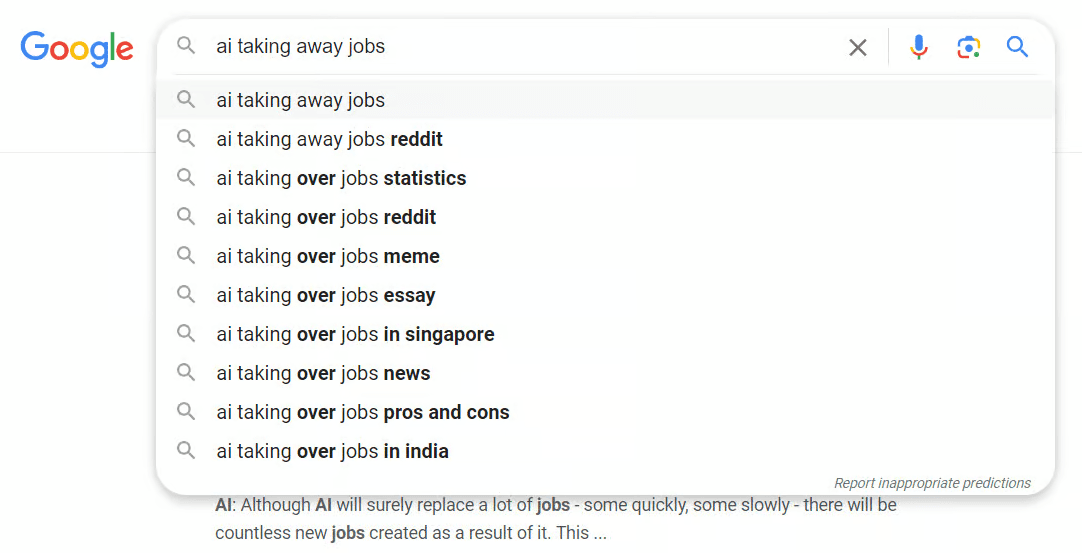
Artificial Intelligence (AI) has been a topic of intense debate and fear, especially regarding its impact on jobs and the workplace. Many fear that AI will replace human workers, leading to widespread unemployment and economic disruption. However, there’s another side to this story—a side where AI could make us better at what we do, especially in fields like recruitment.

Lessons from Go and Chess
The world of professional Go and chess provides fascinating insights into how AI can enhance human performance. After AI systems like AlphaGo and IBM’s Deep Blue defeated human champions, these games didn’t die out. Instead, they thrived. Professional Go players, for example, didn’t just mimic AI; they became more creative and innovative. A study by Shin et al. showed that about 60% of the improvement in Go players’ performance came from novel moves and strategies that deviated from AI suggestions. This forced players to reevaluate traditional moves and abandon weak heuristics, opening up new possibilities.
Similarly, in chess, AI has revolutionized training and gameplay. Modern chess engines can analyze positions and spot mistakes within seconds, a task that previously took humans hours or even days. Top players, like Magnus Carlsen, have integrated AI insights into their training, resulting in a level of play that blends human intuition with machine precision. This collaboration has pushed the boundaries of what is achievable in chess, making today’s top players almost human-machine hybrids.
AI in Recruitment
If AI can make Go players and chess grandmasters better, could it do the same for recruiters? The potential is enormous, but to prove AI’s impact, we need comprehensive metrics across various stages of the recruitment lifecycle. Here are some key areas to consider:
Time Metrics
- Time to fill positions
- Time to hire
- Time to source candidates
- Time to screen candidates
- Time to schedule interviews
Cost Metrics
- Cost per hire
- Recruitment advertising costs
- Agency fees
- Cost of AI tools and platforms
- Training costs for recruiters
Quality Metrics
- Quality of hire (e.g., performance ratings of new hires)
- Retention rates
- Employee turnover rates
- Candidate satisfaction scores
- Hiring manager satisfaction scores
Efficiency Metrics
- Number of candidates sourced per recruiter
- Number of candidates screened per recruiter
- Number of interviews conducted per recruiter
- Offer acceptance rates
- Ratio of candidates to hires
(And other metrics, not limited to, but including: Diversity and Inclusion metrics, Engagement Metrics, Process Improvement Metrics, Predictive Analytics, Scalability, Compliance, and ROI metrics.)
Now if you had data on all these areas, would that be enough to prove that AI makes recruiters better recruiters? Some people think so, as evident by some of the research I have seen. For example…
- Efficiency and Time Reduction: AI-powered tools can automate resume screening, candidate sourcing, and interview scheduling, reducing time to hire by up to 40%. (SpringerLink) (TechnologyAdvice)
- Cost Savings: By streamlining recruitment processes, AI reduces manual labor and reliance on external agencies, leading to significant cost savings. (IBM – United States).
- Improved Quality of Hire: Advanced algorithms match candidates more accurately to job requirements, enhancing employee performance and retention rates. (Hirebee) (NOVA) (ResumeMent)
- Bias Reduction: AI helps mitigate unconscious bias by anonymizing candidate information, promoting a fairer selection process and supporting diversity and inclusion. (Wonderlic).
- Enhanced Candidate Experience: AI-driven chatbots and virtual assistants engage with candidates in real-time, improving satisfaction and creating a positive impression of the organization. (Qureos) (PeopleScout)
- Predictive Analytics: AI uses historical data to predict outcomes like time-to-fill and employee turnover, enabling data-driven decisions and continuous improvement of recruitment strategies. (TechnologyAdvice)
The Ultimate Test: Creativity and Resourcefulness
While these metrics and research findings are promising, a critical test remains. Can AI make recruiters not just more efficient but also more creative and resourceful? A true test would involve comparing two groups: one using AI tools and one without. While the AI-assisted group might finish tasks faster, would they also demonstrate greater innovation and adaptability? I’m not so sure. In a recent episode of “The Source!” I interviewed Vanessa Raath from South Africa. In our talk she mentioned that not having a budget for a lot of the tools we use in the USA has forced sourcers over there to be more resourceful and creative. So, could the absence of AI tools have the same effect as having access to AI tools? Hmm…
Conclusion
AI has the potential to transform recruitment, making processes faster, more cost-effective, and less biased. However, the ultimate goal should be to harness AI in a way that enhances human creativity and resourcefulness. By embracing AI, we might not only become more efficient recruiters but also better ones, capable of reaching new heights of innovation and performance. Conversely, operating without them might make us more innovative out of necessity. Either way, the answer is not living in fear of AI taking all of our jobs away.
But hey, that’s just me. What do you think? Reply to this email with your thoughts or post them on social media and tag @SourceCon. Who knows? You might get a shout-out in a future newsletter. Until then…
May the source be with you!
Jim Stroud
Your SourceCon Editor