Advertisement
Who Owns Your Talent? (hint: it’s not you…)
Get articles like this
in your inbox
The longest running and most trusted source of information serving talent acquisition professionals.
Advertisement
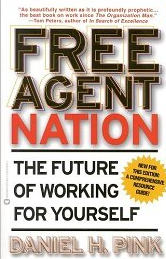 It is hard to believe that it has been nearly 10 years to the day since Free Agent Nation was published, and nearly 14 years since the article by Daniel Pink graced the cover of Fast Company magazine. Since that time, a lot has changed, but given the inflection point we are experiencing with regard to the economy, the job market, accelerating recruitment challenges, as well as changes in recruitment and candidate behaviors, it’s useful to revisit the free agent discussion in light of what has changed (and what has not).
As I work with companies and talk with HR and talent acquisition executives, it is surprising that even today there remain deeply rooted social and organizational norms within even progressive companies regarding a concept of talent ownership.” It has been one of the more surprising artifacts I’ve observed in consulting: even now, organizations maintain a substantial amount of outdated, sometimes-unconscious thinking with regard to a concept that is clearly been eclipsed. This despite the fact that more companies are moving to an HR model of ‘end to end’ talent management. Many do not address some of the underlying organizational principles that need to change in order to compete in today’s New Talent Economy. The concept of talent ownership is one such example: many companies still insist on supporting regulation and rules-based HR policies to control for internal movement. A common example is restricting internal talent from applying for internal opportunities until they have been in their current job for x months. This is completely incongruent with the free-agent economy that exists today.
I’ve said many times, “If you are not recruiting your own people, you are the only company that isn’t…”
That has never been truer than today as social media has created innumerable entry points for recruiters and non-recruiters to reach people in your company. Yet company after company maintains policies that erode the concept of a laissez-faire talent economy internally. They restrict their own employees from changing jobs even as the world around them has evolved to be a free agent nation.
I do understand the practical implications of policies to balance the needs of individuals versus the broader needs of an organization. Clearly things don’t work well if workers are changing jobs every three months. So here are some ways to create programs that work in today’s talent economy.
As usual, sound off in the comments.