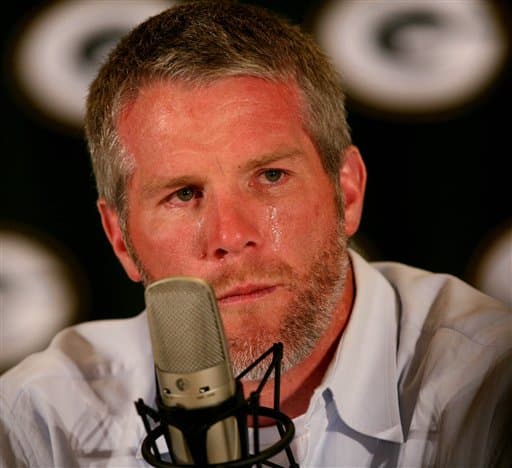
From NFL quarterback Brett Favre’s sexting spectacle, to Navy Captain Owen Honors’ loss of command for producing racy videos, to ESPN sportscaster Ron Franklin’s dismissal for making sexist and derogatory comments, these scandals could be made into blockbuster episodes of an American reality series about “People Behaving Badly.”
With today’s fiery mixture of human nature, social media, and the web, it only takes one ill-advised video, text message, blog post, or photo – and a tsunami of tabloid news and gossip inevitably sweeps across the Internet. Just in the past few months, we’ve seen broadcasters, athletes and CEOs who have left their roles under a cloud of such controversy.
But, as I wrote recently in another TLNT blog post, these cases are a cautionary tale for leaders at all levels: Your workplace, actually whenever you act with colleagues at whatever level, is not a talk show or a cocktail lounge.
It’s all about how we treat each other
The common theme: It all comes down to basic incivility and how we treat each other in the workplace. Calling a colleague “sweet baby” or “a**hole,” as ESPN’s Franklin did, wasn’t necessarily illegal but it’s disrespectful and unprofessional.
Navy Capt. Honors may not have violated the law by producing, broadcasting, and acting in sexually explicit and demeaning videos shown to 6,000 sailors under his command on the aircraft carrier Enterprise, but he crossed a line of propriety and credibility. With leadership, professionalism, and respect being key military values, Capt. Honors’ actions conflicted with current command standards.
While a former New York Jets’ employee accused Brett Favre of sending lewd texts and photos, it’s not clear whether his behavior would be considered illegal in a court of law, though it’s obviously tainted his public image.
In 25 years of working with employers ranging from government agencies, to hospitals, to major sports franchises and multinational firms, I’ve discovered that most organizations have far more problems with everyday bullies – big shots who create unproductive and hostile work environments but are viewed as “untouchable” until their actions become public.
Being professional: It’s about actions as well as results
Many of these people are hugely talented in their jobs. They may have earned multiple degrees and spent decades honing their trades, sports or professions.
But, in all of their striving, they forget that all of us – whether we labor on the ball field, the assembly line, the operating room, the mail room or in the corner office – need to act like a professional in the workplace – not just work like one. In other words, being a professional isn’t just about the results you deliver; it’s also about how you act.
Yet, way too often, athletes, doctors, researchers, high-stakes traders and other industry big shots – as I wrote about in my book, Teaching Big Shots to Behave (and other Human Resources Challenges) – know the rules but don’t believe they apply to them, go ahead and act as they want, and get away with it. That’s what must change.
Many years ago while working at an employment law firm, I learned that lecturing on the law won’t change behavior. Case law, standards and recitation of specific regulations may be useful for law students but not for most others. As we teach in our ethics and workplace behavior training, leaders, managers and employees need to know how to apply basic standards of behavior and civility in their daily work lives.
3 ways to maintain professional standards of conduct
So, here’s my game plan for the NFL, the Navy, ESPN, and your own organization on how to set and maintain standards of professional conduct:
- Make the Rules Matter: Leaders and players need to know that the rules are important to their team and to them personally. Use your helmet as a weapon or purposely strike or shove an official and your team gets a 15-yard penalty and you are automatically disqualified. Likewise, top players and corporate executives need to believe they will be subject to serious penalties, not just financial wrist slaps if they violate clear, basic and important principles and behavioral standards in the workplace.
- Make the Rules Simple: Most of the workplace behavioral problems facing the NFL and other organizations could be avoided or quickly addressed if individuals would simply guard what they say, write or text in all communications when dealing with sex, race, sexual orientation, religion, or age and other personal characteristics – whether in the locker-room, on the massage table, in a conference room or cubicle. At my firm, we’ve taught this principle and a few other simple rules to several million people; they’re clear, basic and they work.
- Make the Rules Stick: One-time events and press releases aren’t enough. Leaders must continually talk about workplace behavioral standards, conduct meaningful training linked to organizational objectives, and create a culture that allows employees to ask questions and voice their concerns. And, of course, the rules have to be applied when violations occur, with penalties fitting the seriousness of the violation. By enforcing the rules, that’s how you get results – on and off the field.
Stephen Paskoff writes frequently about how to build a civil workplace on his blog at www.eliinc.com.