Advertisement
You Don’t Have to be a “Best Company to Work For” to be a Best Company
Get articles like this
in your inbox
The longest running and most trusted source of information serving talent acquisition professionals.
Advertisement
Why do organizations try to become recognized as a “Best Company to Work For?” Is it for the prestige?
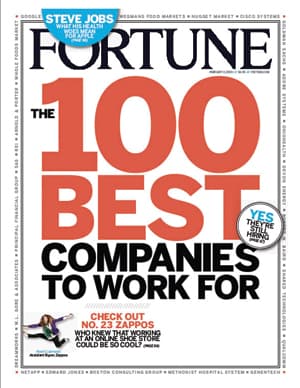
Perhaps. Being recognized as a “Best Company to Work For” (BCWF) has its appeal as the honor does project a positive image that can only help an organization’s reputation.
More likely though, companies seeking BCWF status do so because they believe it will help them attract and hire key talent, and also retain them.
Some companies go a step further. They want to be a preferred employer of choice for prospective and current employees, but they also want to build a culture that encourages their employees to be committed and engaged. They know what numerous studies have concluded.
That is, companies who engage their employees achieve better financial results than those companies who don’t engage their workforce. Sage HRMS reported that a Gallup survey determined high-engagement firms grow their earnings-per-share at a faster rate of 28 percent, while low-engagement firms experienced an average growth rate decline of 9.4 percent.
Makes sense, right? Adopting an attractive culture keeps motivation up, strengthens morale, and increases the chances employees will be engaged.
Unfortunately though, many BCWF companies don’t fully utilize their people as a competitive advantage. They take great pains to ensure that the workplace is employee-friendly by adding health clubs, onsite masseuses, laundry services, and many other attractive perks. They take pride in offering competitive pay packages and some even provide stock awards to rank-and-file employees. They offer training programs that allow employees to develop and grow within the organization.
All of these actions encourage individual motivation and engagement, yet, while they may stimulate a positive and upbeat work environment, none of them directly address the collective utilization of the workforce as a tangible asset. Shouldn’t BCWF status be directly linked to operational excellence and customer satisfaction as well?
If you look closely enough, you’ll find both for-profit and not-for-profit feel-good organizations that have attained BCWF status, but are ineffective and inefficient as business entities. They may be nice companies to work for, but their vendors, customers, and other external constituents may not feel the love.
For those organizations that want to maximize their people as assets, there should be additional actions focused on directly translating engaged employees into empowered individuals and teams that delight customers, and ultimately improve shareholder value.
I’m not suggesting squeezing every ounce of energy and passion of the organization into profits. What I’m suggesting though, is that to be a “Best Company,” organizations need to go beyond engagement as the objective.
“Best Companies” go the distance by planning and executing “human capital initiatives” that go beyond engagement and make the difference in maximizing organizational performance. These “human capital initiatives” are actionable programs that enable full utilization of the workforce to drive organizational performance.
For those organizations that strive to be a great place to work rather than becoming “Best Companies,” they are susceptible to fall into the following traps:
Besides the reality that there are BCWF organizations that aren’t “Best Companies,” there are also plenty of great performing organizations that are also great companies to work for, but have chosen not to seek BCWF recognition.
“Best Companies” make people an important element of their business strategy, and practice Human Capital Management, an “organizational practice by which the human capital assets of an organization are collectively leveraged to gain a competitive advantage.”
Among other actions to leverage their human capital into a competitive advantage, these organizations also:
Being a BCWF is a good accomplishment for those companies wishing to be recognized as such. No doubt these organizations have put themselves in a position to succeed.
However, “Best Companies” realize that being a great company to work for is only the first step in the process. These companies take formalized actions through their workforce to achieve greatness: this is Human Capital Management in action.