Advertisement
What Would Happen If HR Had to Really Sell Their Services?


Get articles like this
in your inbox
The longest running and most trusted source of information serving talent acquisition professionals.
Advertisement
Related Articles
What if Human Resources had to sell their services to their customers, fulfill the promise, and be paid based upon results?
How many HR teams would get passing grades from the executive team, the leaders and the employees?
I came across a cute blurb in Travel & Leisure magazine called “Confessions of a Hotel Reviewer” who travels incognito to hotels where there has been a complaint, and inspects the level of customer service.
Actually, I remember that well from years ago when I was a desk clerk at a Holiday Inn. Everyone panicked for weeks before the inspector was “due” because the implications of failure were severe.
Hotels engage these “reviewers,“ stores and banks use “secret shoppers,” health care uses the Joint Commission, and all to make sure that the promise to their customer/patient is being fulfilled.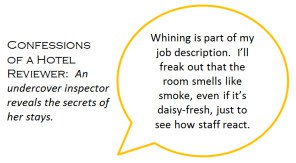
A store customer can reasonably expect to get some version of good merchandise, good price and good style. A hotel customer should be able to expect the promises made on their website. A patient expects high quality and safe care.
As HR practitioners, do we think of the Board and executive leadership, of the leadership team and of the employees, as our customer? Hopefully because we are HR professionals, we know what they need. But do we know what they want?
If we know what they want (e.g., fire an employee) but that is not in their best interest, do we help them understand why?
Years ago, someone in a company I worked for coined the phrase, “find a way to say ‘yes.’ ” We stumbled over ourselves until we realized that there are some times that “yes” is not the right answer, but neither is “no.” Not being able to give the customer what they want is a unique opportunity to explain, educate, influence and communicate authentically.
But let’s go back to the first question. What if HR was not an overhead department, but a business offering human resources services to the organization? How would we know whether we are fulfilling the promise of the engagement?
First, we would need to be clear on our products and services, right? We would define exactly what we would do for the customer, and what it would cost.
Then we would probably negotiate a bit, and come up with an agreed upon engagement. We would probably provide a “service level agreement,” where we would commit to certain levels of service with a penalty for failure to provide. That’s pretty standard vendor engagement process.
Oh, and part of the sourcing and engagement process wold probably be a thorough review of regulatory and legal requirements, to ensure that we, as the vendor, were protecting our client. We would most likely have provided a thorough overview to the organization, educating them on the need for the services, both from a regulatory perspective, as well as a business perspective.
However HR typically is not an outsourced provider and instead is an overhead department, often raising questions in line management like “why am I paying for this?” and “why can’t I do that?”
I wonder if perhaps there is an opportunity for HR to avoid some of the “overhead” whining by treating the work as if it were being paid for the value being provided.
Many Human Resource teams spring up out of necessity – someone needs to do the hiring, someone needs to determine pay levels, someone needs to do training. Being busy, we keep on keeping on.
What if we followed the vendors’ playbook with our customers?
The stores, the banks, the hospitals routinely review their success in fulfilling their promise. Should HR not do the same?
This originally appeared on the ….@ the intersection of learning & performance blog.