Advertisement
Weekly Wrap: Why We’re in the Age of the Expert (Especially in HR)

Get articles like this
in your inbox
The longest running and most trusted source of information serving talent acquisition professionals.
Advertisement
Related Articles
There’s a Scottish musician by the name of Dick Gaughan, who back in 2006 noticed something peculiar:
Every time I see a television program debating some issue, at some point some talking head gets introduced as “an expert” on the subject under discussion to tell us what we should think about it.”
Gaughan figured out then, as you may have also noticed, that today we live in a time where everyone with an ounce of insight and information on a specific topic seems to believe that this qualifies them to speak or write about it. Yes, “we are now living in the Age of the Expert,” as Gaughan puts it.
I can’t imagine there are many fields of endeavor filled with more would-be experts than there are in HR.
I’m not necessarily saying that this is a bad thing, because my experience has been that the more voices you get involved, the better the overall quality of the larger debate.
But Gaughan saw it differently. He believed that the Age of the Expert signaled the Beginning of the End.
The ascent of the Expert is a fascinating phenomenon and I believe it is something which can only happen in a civilization which is in terminal decline. In fact, so sure am I about this that I suggest it could actually be used in future as an aid to historical analysis. If you felt like calling it Gaughan’s Postulate, that would be OK with me…
We are now living in the Age of the Expert. I should explain that, according to Gaughan’s Postulate, the Age of the Expert is the stage in the decline of a society which comes between The Lunatics Taking Control of the Asylum (which immediately follows the stage called The Return to Traditional Values) and the final Terminal Collapse.
I haven’t yet determined the precise relationship between the number of experts and the stage of decline but give me time, I’m working on it. I’m certain it’s calculable given sufficient data…
With the loss of employment caused by the wholesale closure of manufacturing, all the people not employed in actually making anything but employed to oversee those who were, and who would have happily spent their lives sharpening pencils and sending memos to other pencil-sharpeners, have been let loose on the general populace. Their employment opportunities not exactly being thick on the ground, those who didn’t become style consultants, hospital administrators, pop stars or drug pushers have become Experts.
Without The Experts to guide us, it seems, we would be in terrible danger of falling into the awful trap of imagining we could think for ourselves. And we all know where that would lead.”
Now, anyone reading this right now on TLNT knows that there are tons of HR and talent management experts who are speaking, blogging, and generally making themselves available to anyone and everyone who will listen to them.
I look at the good people writing for TLNT more as thought leaders than experts, because really, once you get past a handful of true HR experts – people like Dave Ulrich, Dr. John Sullivan, Jack Welch, Kris Dunn, and a few others – most of the people writing and speaking about HR are really more smart thinkers than anything else.
There’s nothing wrong with that, of course, but what got me thinking about experts and HR was this odd little story coming out of Seattle that seemed to put the entire “expert” debate into its proper context.
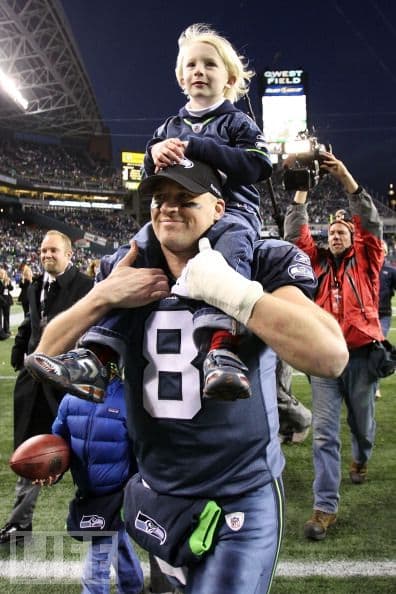
According to the Seattle Times, the 5-year-old son of Seattle Seahawks quarterback has become something of an expert in picking winners in this year’s NCAA men’s basketball tournament, also known as March Madness. As the newspaper reported:
Henry Hasselbeck isn’t quite a one-in-million shot.
More like No. 103 out of 5.9 million.
That’s where the 5-year-old son of Seahawks quarterback Matt Hasselbeck ranks in his NCAA tournament bracket on ESPN.com after 48 games. That puts Henry in the top 1 percent of all entries. Sister Mallory isn’t too shabby, either. She ranks in the top 3 percent.”
Now, this ranking doesn’t take into account last night’s tournament games, but the funny thing is how young Henry made his choices of teams – he picked them based on the team mascots and which ones he liked.
It just goes to show you, everyone and anyone can be an expert, and sometimes the person with the least actual experience is the smartest expert of them all.
Or as Dick Gaughan is fond of pointing out, “Experts built the Titanic. Amateurs built the Ark.”
But there’s more in the news than who is a real HR expert. Here are some other HR and workplace-related items you may have missed last week. This is TLNT’s weekly round-up of news, trends, and insights from the world of HR and talent management. I do it so you don’t have to.