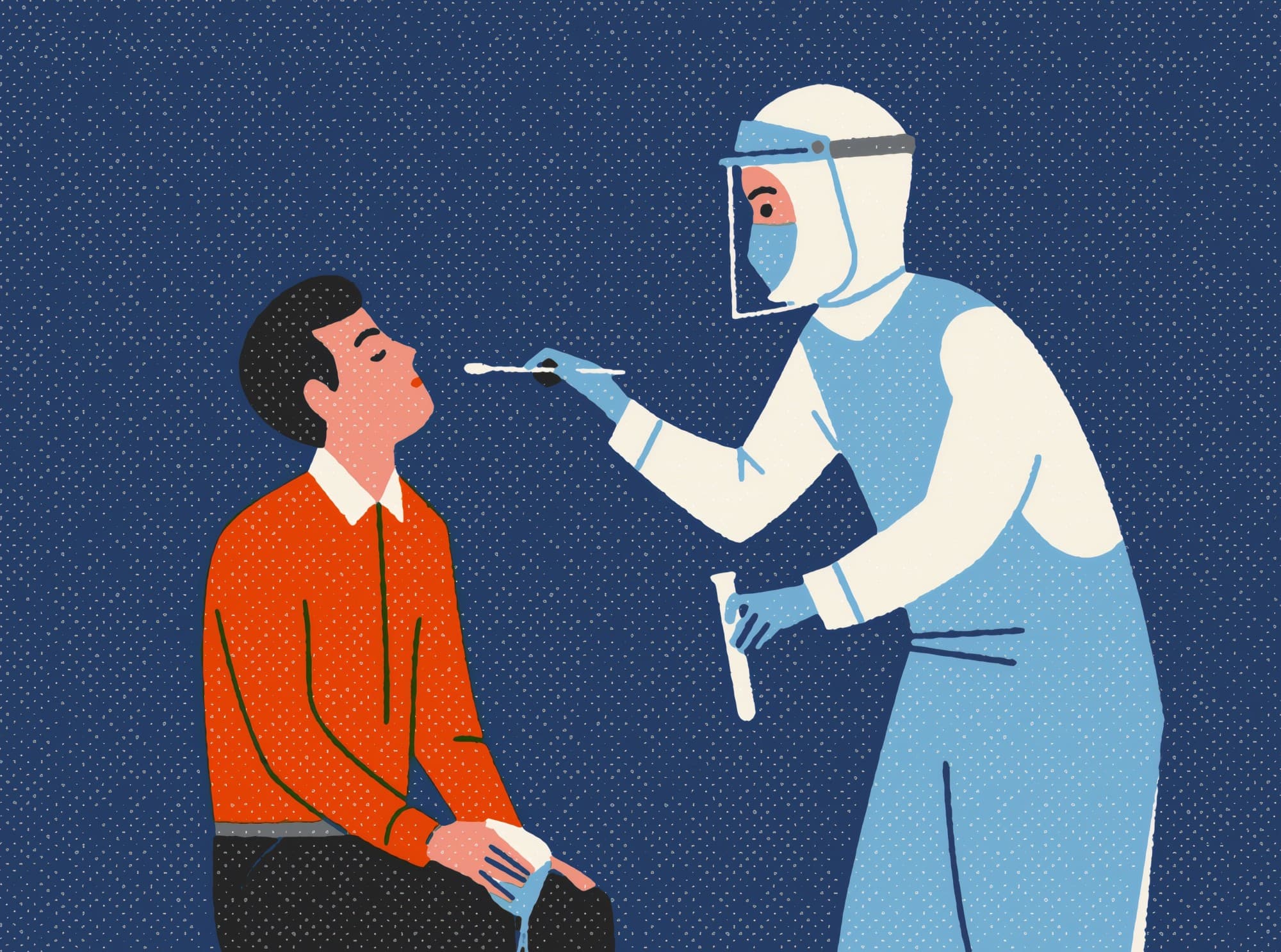
As the reopening conversation continues in earnest, one of the key safety measures concerns how we keep asymptomatic, but infected, employees away from work — all without violating laws or making the whole process cumbersome for employees and employers alike.
Another factor in all of this? Accuracy. While rushing to get businesses going again, organizations are facing a number of tools that actually aren’t actually that effective in keeping people safe. From The New York Times:
But as intensified workplace surveillance becomes the new normal, it comes with a hitch: The technology may not do much to keep people safer.
Public health experts and bioethicists said it was important for employers to find ways to protect their workers during the pandemic. But they cautioned there was little evidence to suggest that the new tools could accurately determine employees’ health status or contain virus outbreaks, even as they enabled companies to amass private health details on their workers.
HR leaders faced with reopening decisions are relying on screening tools that have problematic or inaccurate results. A temperature check may seem reasonable but a fever isn’t always present in those infected. Screening apps rely on voluntary responses to questions. Contact tracing isn’t a proactive measure but it can still feel invasive.
Even rapid testing is problematic. Abbott’s rapid testing isn’t reaching the standards many health officials feel is necessary, missing cases.
Ineffectiveness of these tools stokes two types of issues. One, covered in our quick hits below, shows that nearly half of employees believe their organizations will bring them back too soon. The other issue is whether employees will agree to more invasive screenings if even those aren’t shown to be very effective.
For the companies that need employees in a collective shared space to accomplish work, there aren’t many easy answers on the screening side yet. Instead, many employers are reworking the spaces and creating processes that keep people physically distanced within these shared spaces as safely as possible.
It seems that until better screening options are available, organizations will have to find other ways of keeping people safe.
Quick hits
- Employee perceptions about returning to work continue to evolve, with 80% saying employers need to make changes before they are comfortable coming back to work and 45% believing employers will bring them back too soon. [KRC Research/Weber Shandwick/United Minds]
- What do employees want to see from employers to return to work? Face masks worn by all (46%), disposable gloves (43%), and hand sanitizer (42%) top the wish list. [Citrix]
- 71% of employees are making an effort to take care of themselves during the working day but over half admit to still experiencing burnout. [Monster]
- 3 in 10 Americans have withdrawn money from their retirement savings amid COVID-19 and a majority spent it on groceries. [MagnifyMoney]
- In a bright spot, 44% of HR professionals say their organization is still actively hiring and 26% are feeling little to no effect from the pandemic. [GoCo]
- 55% of people have joined a virtual happy hour but just 34% say they are socializing more with coworkers according to a new survey by… FourLoko [Inforgraphic]
- As more attention is paid to physical and mental wellbeing, 89% of organizations with more than 1,000 employees have a wellness program or initiative. [XpertHR]
- Former Saba CEO Phil Sanders will be taking over for Cornerstone’s Adam Miller next month. The two companies have hit the gas on sharing their vision for the combined company after finalizing the transaction last month. [CSOD]
- Chatbots continue to be a hot category, with Paradox getting $40M in a Series B. [ERE.net]
- Personality assessment solution Traitify raised $12M in a new round of financing. [Press Release]
- iCIMS acquires matching technology Opening.io [Press Release]
Twitter says employees can stay home
This week, Twitter CEO Jack Dorsey announced that they will allow employees to work from home indefinitely. BuzzFeed News reports:
Twitter CEO Jack Dorsey emailed employees on Tuesday telling them that they’d be allowed to work from home permanently, even after the coronavirus pandemic lockdown passes. Some jobs that require physical presence, such as maintaining servers, will still require employees to come in.
“We’ve been very thoughtful in how we’ve approached this from the time we were one of the first companies to move to a work-from-home model,” a Twitter spokesperson told BuzzFeed News. “We’ll continue to be, and we’ll continue to put the safety of our people and communities first.”
A vast majority of the companies 5,000 or so employees certainly can work from home. The same is true for other tech giants that announced that offices wouldn’t be opening for months, such as Microsoft, Amazon, and Google.
Outside of Amazon’s enormous distribution infrastructure, a vast majority of these companies could’ve been working from home well before the COVID-19 pandemic. In fact, many tech companies routinely have hoards of employees working out of home offices. Anyone who commuted in tech epicenters pre-pandemic can certainly appreciate that.
It will be interesting to see how those outside of traditionally remote-friendly industries will adapt. For instance, financial or legal professionals have traditionally worked in offices, even with the advent and popularization of distributed work technologies. Will those organizations change how they work?
Those non-traditional moves will be the ones that will truly indicate that a more permanent shift has taken place in the way we work.
The weekly wrap is where TLNT shares the stories that didn’t quite make it into a full post this week. We’ll also share links to some of our favorite things we read this week about HR, people development, the future of work, and more.