Advertisement
The Trick in Transforming Your Workforce Zebras Into Workhorses

Get articles like this
in your inbox
The longest running and most trusted source of information serving talent acquisition professionals.
Advertisement
Related Articles
If you’ve ever brought on a talented and highly-skilled employee who did not measure up to your expectations due to a lack of work ethic, drive, or character values, you’ve experienced a zebra problem.
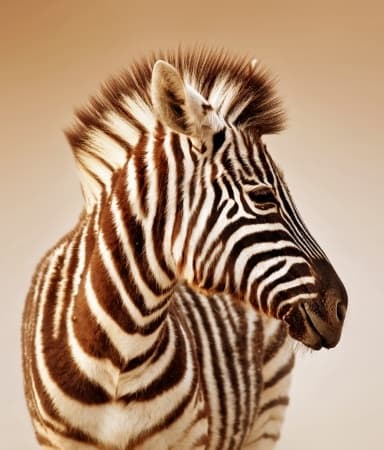
This metaphor will make perfect sense to you when you consider the unique talents and abilities of a zebra.
Like human fingerprints, each zebra has their own unique striped pattern. They typically stand together because their stripes serve as camouflage making it hard for their archenemy, the lion, to single one out to attack.
And because lions are color blind, even when they are standing alone in the tall grasses, a zebra’s stripes make them virtually invisible.
Like horses, zebras can walk, trot, canter and gallop at speeds of up to 35 miles per hour. They have tremendous stamina; even greater than that of a horse.
Zebras have excellent eyesight and can see in color. Their night vision is thought to be about as good as that of a cat or an owl and they have an acute sense of smell and taste. Zebras also have excellent hearing and can turn their ears in almost any direction and communicate by using a variety of sounds and even facial expressions.
They possess better resistance than horses to African diseases and can live up to 40 years.
Zebras are uniquely skilled and talented, even more so, arguably, than a horse.
So why is it you will never see a zebra race in the Kentucky Derby or pull a handsome cab in New York’s Central Park?
You won’t see police mounted upon a zebra to control the crowd at a parade, and you won’t catch a cowboy riding a zebra to drive his herd across the prairie or to lasso a calf at a rodeo. You won’t hear many country western songs about zebras and you’ll never see one go for a million dollars or more at an auction.
Other than being an unusual species to see on a safari or visit at a zoo, zebras are of no real value to humans. They possess great talents and skills, but in simple black and white terms, they’re worthless — which is to say, they are worth less than just about any horse.
A horse can be trained what to do, and they can be motivated to do it. Not so with zebras.
While it may be true that you can’t change the spots on a leopard, it is possible to change the stripes on a zebra. It’s not easy, mind you, but it is possible.
However, you must first be able to recognize the zebras in your stable and then be willing to invest the time and the energy necessary to transform them into productive workhorses, perhaps even champion thoroughbreds.
Here’s how:
The alternative to this four-step process is to simply get rid of anyone whose stripes are showing. Write them off as useless, a bust and thin your herd.
But turnover is extremely costly, and the practice of rapidly kicking non-performers to the curb is a management tactic that’s getting harder to justify. There are fewer and fewer thoroughbreds on the horizon, and a growing surplus of zebras.
So, unless you have a stable of stallions and your full of foals, the timing is right to develop your skills in zebra transformation.
This was originally published on Eric Chester’s Reviving Work Ethic blog. His new book is Reviving Work Ethic: A Leader’s Guide to Ending Entitlement and Restoring Pride in the Emerging Workforce. For copies, visit revivingworkethic.com.