Advertisement
Time to Step Up Your Game: 2030 Megatrends You Need to Understand
Get articles like this
in your inbox
The longest running and most trusted source of information serving talent acquisition professionals.
Advertisement
Related Articles
There are times when it’s hard to escape the impression that change is in the air.
We live in such a time. Deep-seated forces are reshaping the global landscape, creating the need for a new brand of business leadership.
For HR, this presents both a unique challenge and a golden opportunity to deliver real strategic value to the business.
HR leaders will be expected to exemplify this new style of leadership. And the function will be tasked with creating and maintaining a pipeline of talent capable of guiding their organizations through seismic shifts.
Far-reaching change is being driven by powerful “megatrends” – long-term processes with global effects and profound implications for societies, as well as for businesses.
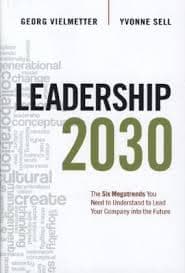
My Hay Group colleagues Georg Vielmetter and Yvonne Sell describe these developments in their new book, Leadership 2030: The Six Megatrends You Need to Understand to Lead Your Company Into The Future. The megatrends they highlight are:
The megatrends will place new demands on business leaders, calling for a different approach to leading organizations. The leaders of the future will need to be altrocentric.
Altrocentric individuals focus on others rather than themselves. They understand that their main source of power is other people. They know who their stakeholders are, and reach across traditional boundaries to empower them.
Altrocentric leaders are characterized by strong strategic abilities and ethical standards. They have an instinctive grasp of a complex and changing environment, and know how to make sense of the world for those around them.
The good news is that the best of the current crop of HR leaders are ahead of the altrocentric curve.
Hay Group benchmarked exceptional HR leaders against typical peers. We found outstanding leaders significantly more likely to excel at strategic thinking, interact with stakeholders, work across organizational boundaries and take a strong ethical stance.
In short, great HR leaders already display many of the altrocentric attributes required for life under the megatrends.
Leaders of this kind are one in a hundred or more. But as the megatrends gather force, they will need to be more like one in ten. Ultimately, the altrocentric style of leadership needs to become the default approach.
There lies the rub for the HR function: identifying and nurturing leadership talent is set to become increasingly difficult.
The leaders of the future will need to generate loyalty among diverse, independent and remote teams, despite having little direct authority over them. This will require leaders who can keep their egos in check, and are willing to trade personal power for collaboration.
These people will be hard to find. They will not be shouting their achievements from the rooftops. They will not be screaming: “Look at me, hire me, promote me.”
Instead, they will be getting on with the job of steering their organizations through the effects of the megatrends, and staying quietly focused on their stakeholders, not themselves. In this context, talent spotting will demand much greater effort, deeper insight and more considered observation than in the past.
Talent management will also be a whole new ball game.
Altrocentric individuals think and act differently, and are driven by different motives. HR will therefore need to think differently about how to inspire them. The conventional wisdom on leadership development will no longer hit the mark.
The current approach assumes that leaders are motivated by personal power: the ability to influence others in line with their own interests. But this isn’t what gets altrocentrics out of bed in the morning.
As mentioned, they are driven by empowering others. They resort to the very opposite of personal power. They rely on socialized power: the ability to enable others to perform.
As such, traditional ways of encouraging leadership performance will not tap into the motivations of altrocentrics. HR will need to readdress career paths, performance management systems and reward packages to incentivize the next generation of leaders.
A further motivating factor for altrocentrics is having a higher purpose: an objective beyond commercial success that will bring out the best in them and their teams – for example, delivering a truly unique service to customers.
As the collective conscience of the organization, HR is ideally placed to help define such a cause, and to support leaders as they communicate it down through the hierarchy.
It is therefore time for HR to step up its game. The megatrends are changing everything we thought we knew about leadership.
This is HR’s opportunity to cement its role as not just a strategic partner to the business, but as the critical function in a future that will look very different to the present.