Advertisement
The Titleless Leader: The Critical Value of a Compassionate Heart
Get articles like this
in your inbox
The longest running and most trusted source of information serving talent acquisition professionals.
Advertisement
By Nan S. Russell
Compassion, like trust, is one of the four needs that ignite natural followership and workplace results.
Operating with a compassionate heart is a titleless leadership component. Bottom line? Kindness matters.
I was reminded of that while settling into a seat behind a row of text-messaging siblings. I noticed my growing irritation when the one in front put his seat back into my already cramped leg room, as the group bantered loudly. This four hour flight was going to be extra long, I muttered to my husband.
By the time the plane took off, I was braced for the return of the young man’s seatback into “my area” and a continuation of rowdy teenager behavior. But I couldn’t have been more wrong.
When he started to adjust his seat in my direction, his older brother reminded him that because someone was seated behind him, it wasn’t polite. “Wow,” I thought, “What a small kindness to practice and teach your children.” I was impressed as the two brothers and sister quietly listened to iPods and read the entire flight.
I had misjudged them. That was further evidenced while disembarking in Denver to change planes. The young man in front of me quickly stood to aid a passenger struggling to retrieve her bag from the overhead bin, and all three patiently facilitated an orderly queuing-off so families in front with car seats and toddlers could disembark.
Taught to notice the little things that impact others, these siblings automatically extended a considerate approach, helping hands, and thoughtful behavior. They were a good reminder to evaluate my own actions. How often do I forget to hold the door, say thank you to a kindness, or offer assistance? How frequently am I blind to others’ needs, or cause frustration because I’m inattentive to how my actions are affecting them?
Sure, recognizing and doing small things won’t change the world. But it will improve it. My mood was saved that day by one small act of kindness.
Life is busy, hard, challenging, and complicated enough. Recognizing the power of the little things we can do to help another get through their day with more ease and grace, seems a good idea to me. Ian MacLaren, a 19th-century Scottish author and theologian, put it well, “Let us be kind to one another, for most of us are fighting a hard battle.”
But words like “kindness” and “compassion” used in connection with work make some uncomfortable. Will you appear weak and naïve to display kindness? Can you be both kind and influential? Compassionate and business minded? Caring and fair? Yes, you can. And titleless leaders are.
So what does a compassionate heart look like in the real-world of company policies, business priorities, and cries for fairness? Below are three quick ways you can show more care and compassion within any position, role, or sphere of operation, even when the organizational culture runs counter to the concept.
And if you’re wondering, “what’s the benefit?” ask yourself, who would you follow – someone who demonstrates kindness, or someone whose actions spark mental name calling unfit to print?
Kindness an compassion are alive in many work groups. It’s the preferred style of titleless leaders and requires no formal policy statement, organizational mandate, or approval. It’s simply their way of being.
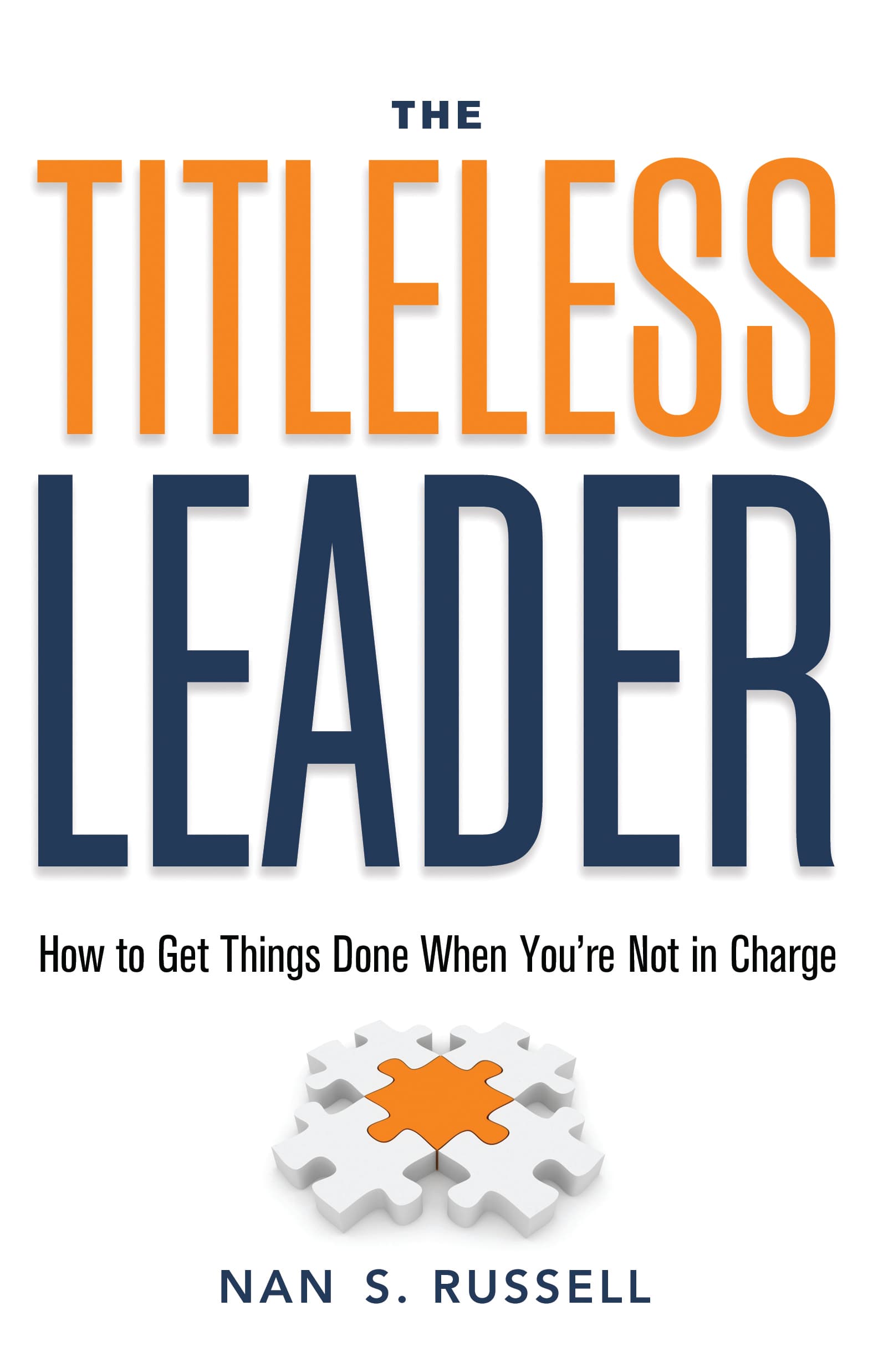
Reprinted, with permission of the publisher, from THE TITLELESS LEADER – How to Get Things Done When You’re Not in Charge, copyright 2012 Nan S. Russell. Published byCareer Press, Pompton Plains, NJ. 800-227-3371. All rights reserved.