Progressive organizations have been grappling with the notion of effectively leveraging Diversity & Inclusion (D&I) initiatives within their workforces to gain a competitive edge in increasingly sensitized markets for quite a while. However, such measures often differ in their level of success, with passive resistance being one of the key factors as an unfortunate side-effect of the lack of buy-in from some.
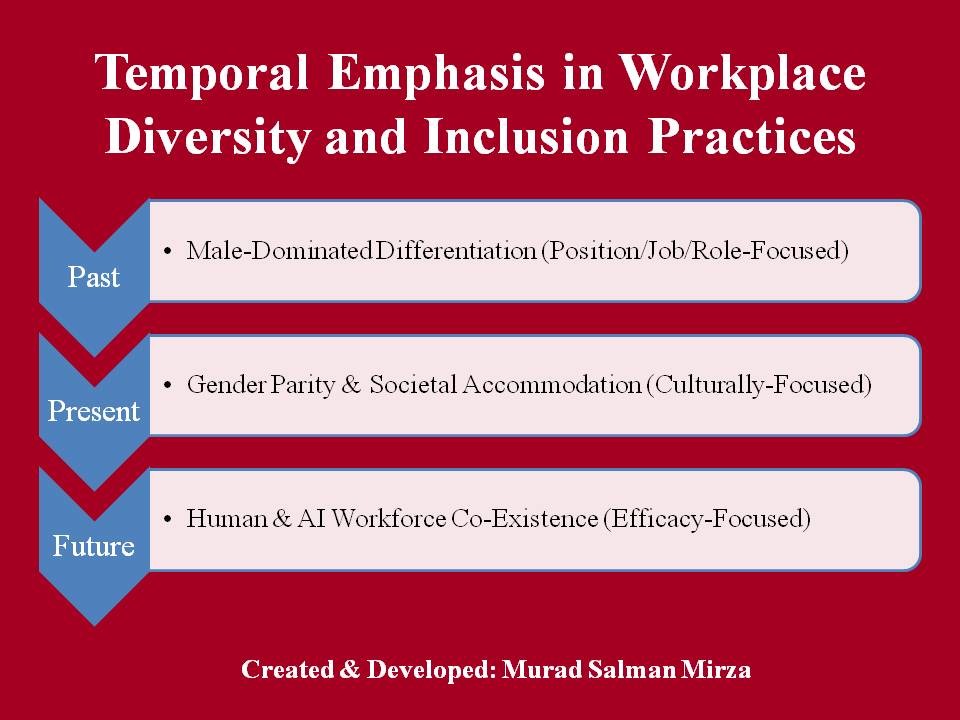
Nevertheless, multinationals have been inevitably at the forefront of driving the Diversity & Inclusion approaches as they compete in multiple markets with unique characteristics and need to have the localized approach to overcome the challenges of ground-based realities. They are also acutely aware of preserving the sanctity of the corporate brand in an era of empowered consumers riding boldly on the digital waves. Their management approaches are often the lighthouses for regional businesses to modernization. However, this was not always the case. Let’s take an overview of the temporal emphasis in Diversity & Inclusion practices to appreciate the evolution of the corporate landscape and what the future holds in an era of artificial intelligence (AI), as follows:
Past D&I Emphasis
Organizations used to have a marginal focus on D&I and were primarily concerned with the productivity and division of labor according to expertise among predominantly male professionals. Senior positions were considered the right of privilege based upon preferred pedigree that could include; dominant social standing, graduation from prestigious institutions, rampant nepotism, etc. Such practices were generally the vestiges of the colonial era, cultural constraints and the intentional subjugation of certain population segments of society, e.g., women relegated to the stereotypical roles of nurses, teachers, office secretaries, no advancement for locals beyond middle management in multinationals, induction of most ex-pats as low-tech and/or manual labor, most business decisions centralized at the corporate headquarters based in another country, etc.
The aforementioned arrangement worked well for secure organizations accustomed to operating in low-competition, monopolistic, or cartel-led markets. However, with the advent of the internet and consumerism gaining profound influence, such employment conditions were deemed archaic in most countries as borders opened up to facilitate efficient global trading on inherent strengths, and more opportunities became available for talent mobility.
Current D&I Emphasis
The increasing emphasis on humane working conditions, changing demographics, and the need for developing a more equitable work environment necessitated the liberation of the workforce from the clutches of rigid management practices. This ushered in the realization of having a robust and vibrant corporate culture driven by clearly defined core values to ensure a motivated and capable workforce taking the organizational reins for staying competitive in precarious economic situations.
Consequently, women and minorities are now increasingly being accommodated in top/senior positions and form a significant part of the ‘employer brand’ in terms of attracting desired talent with the necessary skills, attitudes, and competencies. There is still significant work to be done in many sectors and business entities that are having a hard time shrugging off the privileged status accorded to a certain category of males in the past. Terms like ‘the boy’s club’ and ‘glass ceiling’ continue to hold relevance today, although, there are quite a few shining corporate examples that are role models for incorporating progressive D&I practices.
Future D&I Emphasis
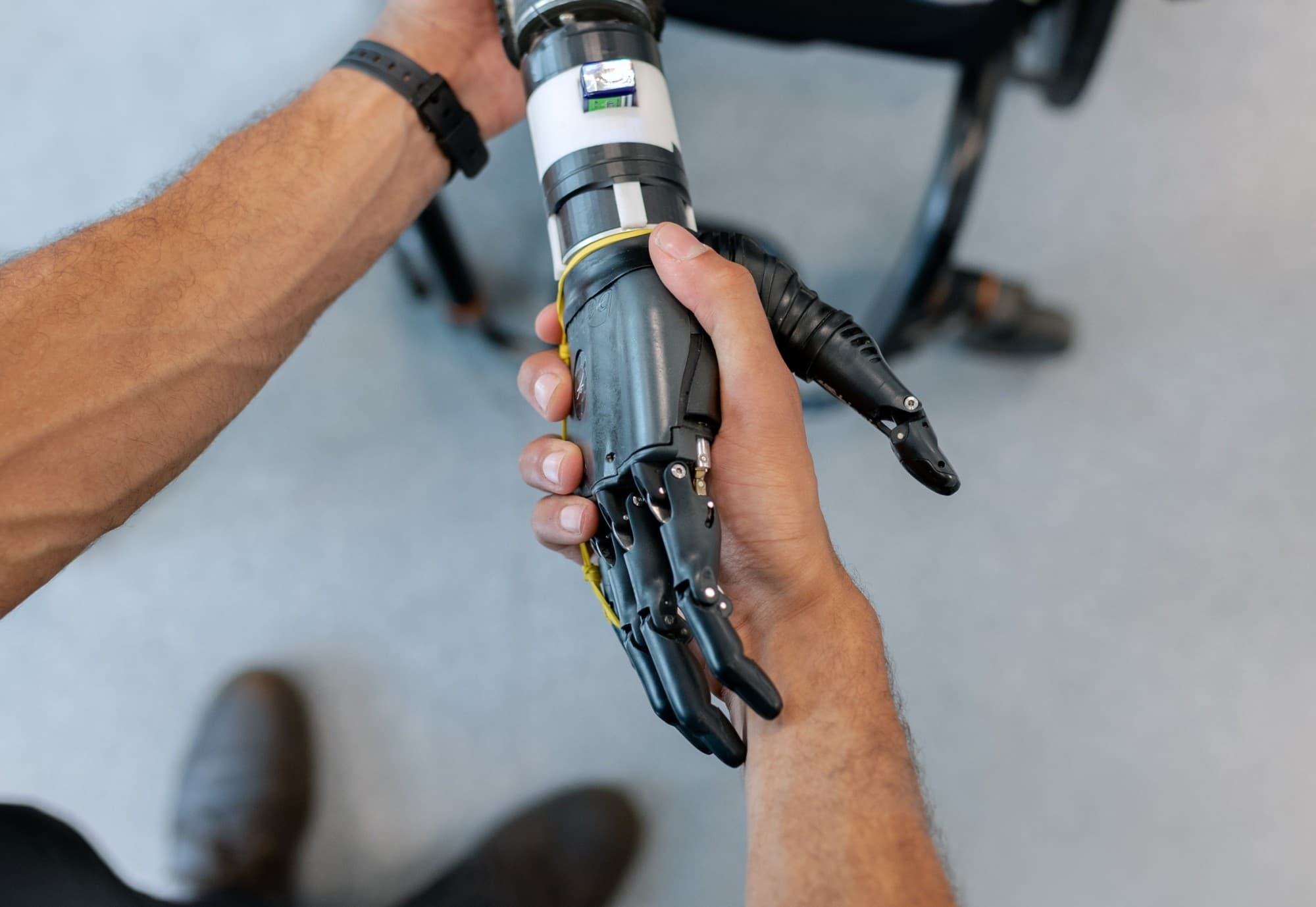
AI is already revolutionizing the workplace, although it is just scratching the surface in terms of the possibilities that exist for having a transformative impact in every sphere of modern lifestyle. Progress is now gauged exponentially, and the prospect of having AI matching and eventually surpassing human intelligence is creating a combination of palpable excitement and foreboding nervousness across a broad range of the professional spectrum. An absence of realizable and enforceable robust frameworks/regulations at a global level is leading to multiple approaches to building new types of AI-enabled devices/life-forms without a supervisory mechanism, e.g., by United Nations (UN) through a high-level position like the Under-Secretary-General of Cyber Innovation. Such an unbridled approach to innovation that has the potential to invalidate humans as a species is raising a plethora of legal, moral, and ethical questions that are mostly unanswered at the moment and being overshadowed by the towering exuberance of discoveries associated with the optimism of making lives better.
These aforementioned aspects are bound to impact the workplace with significant D&I issues as AI-enabled life-forms eventually get classified as ‘people’ and are liable to be treated as colleagues/peers in teaming up with human counterparts. Some of the questions raised could be (not in any particular order):
- How will AI-enabled life-forms be recruited and selected into the workforce?
- What kind of rights will be accorded to AI-enabled life-forms?
- Will AI-enabled life-forms have a specific gender that can associate with male and female colleagues/peers as part of a diversified workforce?
- Will Diversity & Inclusion become agnostic in terms of gender imbalances after AI-enabled life-forms get classified as an ‘employee’?
- How will AI-enabled life-forms engage in decision-making on an equal footing with human colleagues/peers?
- Will there be sensitivity training for the combined workforce of humans and AI-enabled life-forms to get comfortable with each other?
- Who would adjudicate in case of a conflict between a human and an AI-enabled life-form?
- Will AI-enabled life-forms have to pay taxes and be liable for transgressions like their human colleagues/peers?
- What will be the form of reward and recognition for an AI-enabled life-form?
- How will the ‘employee policies/procedures/instructions manual’ change for a workforce comprising of both humans and AI-enabled life-forms?
- How will the core values and the corporate culture change with the induction of AI-enabled life-forms as ‘employees’?
- What will be the criteria of gauging performance and career progression for an AI-enabled life-form?
- Will AI-enabled life-forms require counseling? If so, would a human conduct the respective activity or another AI-enabled life-form?
- How will AI-enabled life-forms be integrated within the succession management plans?
- Could humans be answerable to an AI-enabled life-form that is in a leadership position?
- What will be the working conditions for an AI-enabled life-form?
- Will AI-enabled life-forms be allowed to switch employers?
- How will AI-enabled life-forms be retired/relieved of service?
- How will AI-enabled life-forms be treated if their employer is bankrupt/goes out of business?
- What kind of skills, attitudes, and competencies do the organizational leaders need to possess for managing the combined workforce of humans and AI-enabled life-forms?
- How would the benchmarks be established to gauge the best practices in terms of managing the combined workforce of humans and AI-enabled life-forms?
Food for thought
AI was invented by ambitious humans and is steadily moving towards a stage where life-forms enabled by it become a new species with a persuasive claim to their own rights and privileges, including those associated with Diversity & Inclusion. It remains to be seen whether AI-enabled life-forms would choose to remain within human control once they reach and eventually surpass human intelligence in all matters of form and function.
Presently, humans are too busy discussing, debating, and deliberating Diversity & Inclusion issues within the human context, while significant advancements are being made with respect to AI-enabled life-forms in a regulatory vacuum. Hopefully, the human gods won’t get undone by their own creations, and a predominantly positive synergistic and harmonizing co-existence can be realized with minimal negative repercussions.