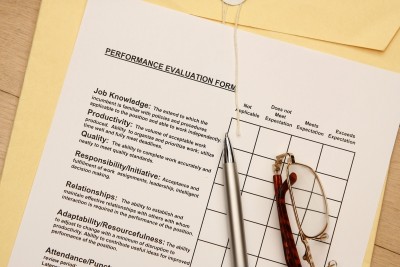
A definition of insanity I’ve heard many times is this: “Doing the same thing over and over, expecting a different result.”
Under that definition, it is clear to me that the practice of traditional performance appraisals is insane. And yet, we continue to do them within our organizations — by the millions.
It’s a perplexing situation. A few weeks ago, I asked a large room of recruiting professionals at a conference to raise their hands if they felt that traditional performance appraisals were a reliable and consistent way of measuring performance. Not one hand went up. Not one. Houston, we have a problem.
Why everyone hates performance reviews
If you want to get to the bottom of issues with the traditional performance appraisal, you have to do some research into both its effectiveness and its application. When you ask people about this practice, you will find out three things. In general:
Employees hate getting performance appraisals.
Managers hate preparing and giving performance appraisals.
HR hates administering the performance appraisal process.
But we do a lot of things to our employees that don’t always like, so maybe that’s not enough cause to destroy the performance appraisal. If you want more reason, you need to take a step further and look at the actual performance data being captured and how it’s used in most organizations.
The best place to start is to chart out the distribution of ratings within your organization.
Most everyone dreads dealing with performance appraisals.
When we design appraisals with a 5-point rating scale, we naively assume that managers understand and will rate people appropriately using the 3 to represent “meeting expectations.” In my experience, when you look at the actual distribution of scores, you find that scores will center around 4 with some 5’s and 3’s, only a few 2’s and nearly no 1’s. In essence, the organization will slide the scale to the positive.
Part of this is probably due to the fact that a number or organizations still link these scores to compensation increases. The other part is that managers game the system to avoid conflict with their direct reports by giving higher scores that what are deserved.
Do appraisals improve performance?
When you look at the performance appraisal through this lens, it’s hard to see how this practice could be positively impacting performance within the organization. So, we add one more conclusion to the list:
Traditional performance appraisals provide little evidence of actually improving performance.
So, why do they still exist? When pressed, most people will say that HR requires it so that the organization has some record of performance for each employee.
Let’s first be clear that there is no legal requirement to do this. I think that most people assume that performance appraisal data should help you more effectively take action on your low performers and problem employees, but we know that it’s quite the opposite.
Because our managers inflate performance appraisal ratings to avoid conflict in the process, the performance appraisal often makes it much harder to fire and discipline the people who deserve it. So, that leads to one last conclusion:
Most organizations would better able to deal with problem employees if they had no performance appraisal at all.
When you add all of these conclusions together, you can’t avoid the truth that stares us in the face: the traditional performance appraisal must die. I have been advocating this position for years and have yet to find anyone who can or will make a valid argument in its defense. It’s the logical and reasonable thing to do.
2 alternatives to performance reviews
You may not be thinking that if we kill the performance appraisal, what do you do in its place? Here are some alternatives.
Do nothing. If your managers know how to manage, they don’t need an artificial process of performance management. They are doing it on their own every day because it’s the only way they can successfully drive the results you demand of them. My suspicion is that if you simply eliminated the performance appraisal, you will improve organizational performance by eliminating the wasted time and emotional energy that is lost in this process.
Have performance conversations. Performance management really boils down to a simple question: did you do what was expected of you? Performance management isn’t about forms and ratings. It’s about meeting expectations. So, teach managers how to have conversations with employees to clarify expectations up front and to measure performance against those standards on the back end.
Performance management doesn’t require formal documents or process. It is incredibly simple. We’ve added complexity over the years based on faulty assumptions and misplaced hope that the additional forms and processes add value. They don’t.
The main output of the traditional performance appraisal in most companies is dread, not performance. It’s time for this poorly designed and conceived practice to go the way of the dinosaur.
Performance appraisals must die. And they must die today.