“Everything that helps information flow is good for society.”
Words spoken by Wang Xing, founder of the site known today as RenRen, a Chinese Facebook “clone.” Yet RenRen blocks its users from sharing links to certain competitors in social and group-buying (it owns Nuomi.com, one of China’s best-known group buying websites) by returning the error message: “Posting failed, this news contains unsuitable content, please review it,” when users attempt to post a link to sites like Meituan or Mi Liao, for example.
On May 4, 2011, RenRen went public in the NYSE, listing as RENN and raising $743.4 million in the first hours of its IPO. Since that day, RENN value has plummeted by over 50%.
Recently, news came out that Hong Kong-Chinese microblogging site Sina Weibo will soon launch in English, making it a potential rival to Twitter. And we, of course, are interested in a potential stir-up…
According to the Wall Street Journal,
Sina Corporation [parent company] is developing an English-language version of Weibo, which had over 140 million registered users at the end of April, a company spokesman said [two weeks ago] Wednesday. Sina doesn’t have a public timeline for its release and it’s still in the “first stage” of development, he said.
As far as being a public company, Sina Corp. has been publicly traded on the NASDAQ since June 2010 (SINA), and as of now there are no plans to list Weibo. Sina Corp. has fared better than RenRen, and with the speculated English version of Weibo as well as monetization and technology upgrade plans for the site, there are some silver linings here for them.
But still, Sina Weibo also selectively screens links. For example, posts from Jiepang (a Chinese Foursquare clone) are blocked from appearing in search results. Interesting and at the same time puzzling, since microblogging sites seem to be staying one step ahead of the government’s censorship efforts. In a Washington Post article earlier this spring, it was noted that Weibo users “are regularly engaged in a virtual debating free-for-all, touching on some of the most off-limits or politically touchy topics.” In fact, some politicians, department officials, and police departments are even launching microblogs in attempt to keep up. In the article, Xie Gengyun, a professor at Shanghai Jiaotong University, is quoted to have said,
Weibo is changing the structure of the public opinions in China. In the past, the public agenda or hot topics were decided by the elite and by the journalists. The public cared about what they cared about. But right now, the situation is changing. Weibo has conquered the dominant position in shaping public opinion.
But since there seems to be a lot of self-censorship going on without even taking into account the Chinese government, how is this going to affect the global success of an endeavor like Weibo? Well, we’re actually more interested in what this may do to affect sourcing from a global standpoint.
Censorship in China
Microblogging sites, even though they are faring well so far in allowing freer discussion, remain hot targets for Chinese government censorship because of the ‘citizen journalism’ aspect of them. And it looks like if Sina Weibo wants to go global, they’ll still have to comply with Chinese Internet regulations, which may put a slight damper on the efforts. Let’s have a look at some facts about Internet censorship in China:
- The Chinese government began a project known as “The Golden Shield Project” in 1998; today, that project employs approximately 30-50,000 “police” who monitor blogs, chat forums, and even email — these individuals also ‘guide’ conversations online.
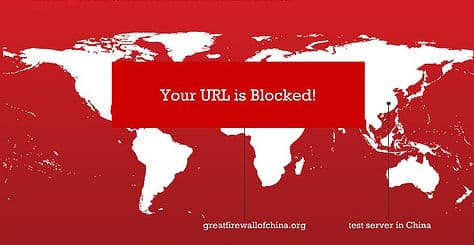
- In 2003, as part of “The Golden Shield Project,” The Great Firewall of China was launched and began blocking web sites on an array of sensitive topics and heavily restricting access to content from many others, like Flickr, Wikipedia, Google, and of course Twitter, which along with Facebook was blocked in China in 2009. Want to try it out? Check out this neat resource, greatfirewallofchina.org, and see if your favorite website is accessible in mainland China. As of the writing of this article, SourceCon.com is free & clear!
It’s not all negative, however:
- Censorship has, in a way, boosted competition amongst “knock-off” sites that mimic the ones that are blocked — sites push one another toward more strategic and technological advances.
- According to a Fast Company article earlier this year, “Chinese Internet users are twice as conversational as American users; in other words, they’re twice as likely to post to online forums, chat in chat rooms, or publish blogs.” From a sourcing standpoint, making connections with people through these sites might seem to be easier given the level of use.
Competition is good. Conversation is also good. But…
What good (or bad?) does this do sourcing?
I spoke with Steven Yeong who wrote a SourceCon article last month highlighting some of the social networking sites in China, Sina Weibo being amongst them. Yeong wrote,
The important considerations for any global organization operating in China is to implement local candidate sourcing solutions and not implement a one-size fits all solution that is rolled out globally. Starting with these and other similar sites is a great place to begin.
Sina Weibo commands nearly 60% of the Chinese microblogging market share, so to ignore it as a source for finding and reaching Chinese talent would be foolish. However, as a Chinese company, Sina has stated that it will still operate its English Weibo service according to Chinese Internet laws.
Yet while there is hope for Chinese microblogging, with the impending launch of the English Sina Weibo service, Yeong believes that if sourcers desire to operate in China they will still need to make some concessions and play by Chinese rules in order to participate in the discussion.
What good could come from this? Yeong had some thoughts on this:
- Sina Weibo has better Internet traffic in China — sourcers can use Weibo to find and reach out to Chinese executives who are bilingual.
- Many companies developed in the U.S. and Europe and heavily used by sourcers around the world have been blocked by the Chinese government — LinkedIn even was among them for a short period in February — so gaining knowledge of and using some of the Chinese social network “clones” will give you an advantage over those who don’t.
- Of all the Chinese social network technologies, Weibo seems to allow the ‘freest’ of speech.
With the good, though, there are always challenges:
- Self-censorship: Yeong noted that even in his country of Singapore, self-censorship happens a lot. Rather than having the authorities come and shut them down, citizens censor themselves and each other. As such, it is good to know what topics are off-limits for search and public discussion when using Chinese social networks (topics like politics, searching for government authorities, and so forth will likely shut you down).
- Using an Internet service that is based in China, and therefore subject to its regulations, means that you have to play by their rules. And it also means that there is the potential that the Chinese government may monitor your activity. You have to decide if it’s worth it to you to give up that level of privacy.
Sometimes you have to play by others’ rules if you want to participate in the game. You have to make the decision and consider all of the potential pitfalls. Companies will have to be even more sensitive to what they put out there. Yeong had a few parting words of wisdom to share regarding Sina Weibo and other Chinese social networks that are certain to follow suit in trying to reach beyond the Mandarin-speaking communities they have saturated to bring in new audiences:
Adapt to the cultures in which you are sourcing. If you’re using tools that are designed to be best for you in your location, there may be firewalls or other roadblocks in other countries that prevent people there from using those tools, thus making it a less fruitful resource than if you were to concede a little and use a local resource.
Will Sina Weibo legitimately compete with Twitter? Neither Yeong nor I think so — but it will certainly cause a stir in the social media and microblogging communities. And if nothing else, it will open up another window into the world of Chinese social networking for the rest of the world to see.
Your thoughts on this topic are welcome. If you’re currently using Chinese social networks to source, we’d love to hear from you. Do you think the benefits of using Sina Weibo or other Chinese services outweigh the potential challenges and forfeiture of certain privacies in doing so? Share your thoughts in the comments below.