Incentive, rewards and recognition programs, long disjointed, even haphazardly administered, are beginning to coalesce into reasoned and organized approaches that support performance management.
It’s a trend just beginning to be recognized in the latest report from TLNT Research and underwritten by HALO Recognition. The Role Incentives, Rewards and Recognition Programs Have in Today’s Performance Management report takes findings from interviews, reports, research, and data to illuminate the new ways organizations are thinking about incentives and performance, showing that: 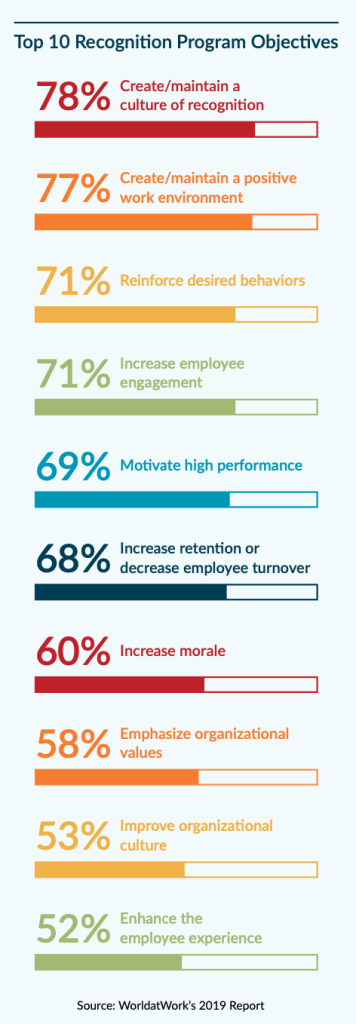
- 93% of organizations align their rewards program with organizational goals
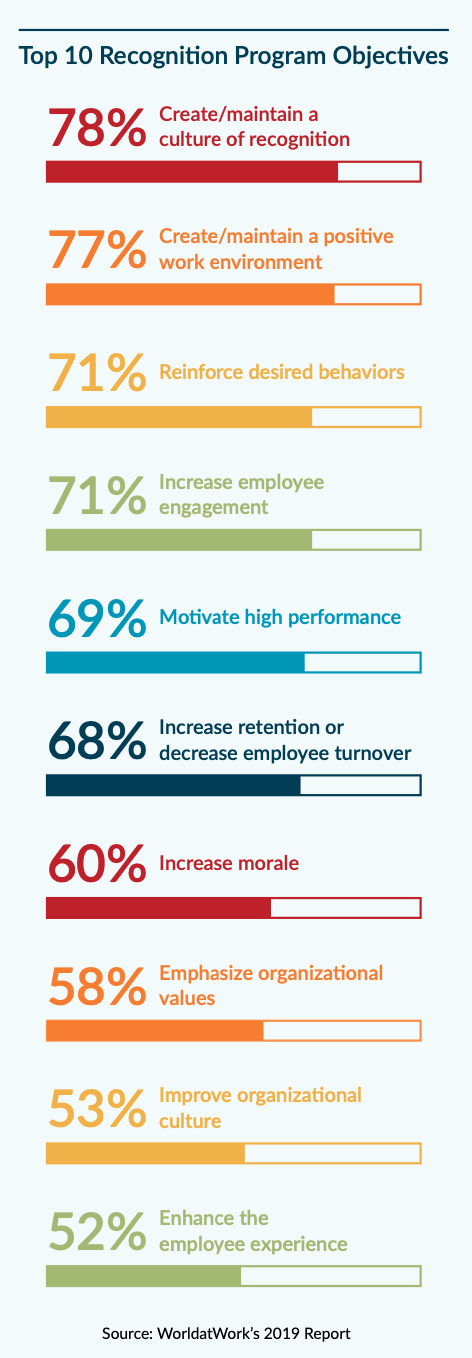
- 71% of organizations say the objective of their programs is to increase employee engagement
- A third of organizations say performance or productivity is the primary goal
- 45% of companies see incentives, rewards, and recognition programs as strategic
- 84% of organizations are using non-cash incentives, up from 24% in 1996
While the report brings together a wealth of reports and research on the topic, it covers a few areas that are important to highlight for organizations to consider as they look at the role of incentives, rewards, and recognition in their own organization.
The role of non-cash incentives grows
In the mid-1990s, Goodyear Tire conducted an experiment in which employees at half its stores got a cash bonus for every dozen tires they sold. At the other half, employees were offered their choice of a variety of merchandise and travel awards.
Both groups increased sales, but the non-cash group sold 46% more than those in the cash bonus group.
“Conventional wisdom is if you pay people to do something, they will do it,” says David Lassman, distinguished service professor of organizational management at Carnegie Mellon University’s Heinz College. “People say the best way to incentivize people is with money. As it turns out, that’s just wrong.”
Since the 1990s, there’s been a shift in thinking about the role of cash, though.
When the Incentive Federation (IFI) first started tracking the use of non-cash incentives in 1996, 24% of US companies were using something other than cash. Then, the size of the incentives and rewards sector was about $26 billion. By 2013, those figures grew to 74% of US companies spending $77 billion. In the most recent 2016 report, the IFI found 84% of US companies offered non-cash rewards and spent about $90 billion on their programs.
Understanding how gratitude plays a role
A few years ago, researchers tested the impact of gratitude on the productivity of university fundraisers. Both groups made phone calls as usual soliciting donations. Fundraisers were paid a set salary; there was no bonus or incentive paid.
However, one group got a pep talk from the director before starting work. She expressed her gratitude and that of the university’s for their effort.
In the following week, the gratitude group made 50% more fundraising calls than did the other group.
As valuable and essential as formal programs are, a critical missing piece is managerial feedback in the form of appreciation and gratitude, and constructive corrective feedback.
While workers value praise and appreciation from co-workers, customers and others, the most meaningful and memorable recognition comes from their manager. Even more remember that than they do recognition from a higher up, including the CEO.
Remote employees, technology, case studies, and more
The report also goes into detail about
- How organizations can engage remote employees, who often seem out of sight and out of mind
- The use of technology for facilitating these programs
- The future of incentives, rewards, and recognition
- And four case studies that show how organizations are rethinking the role of incentives and performance
Want to learn more? Download the full report or sign up for our free webinar on March 11th that will go into more depth on the strategic role of incentives.