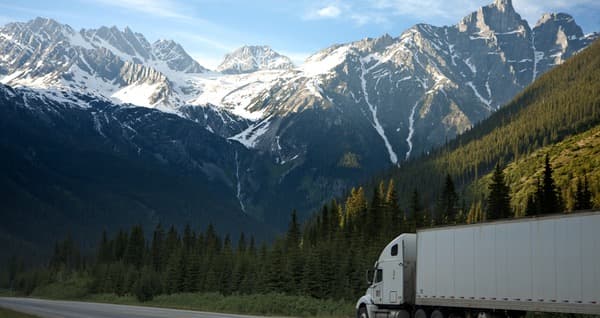
In the next decade, robots could replace 1.7 million American truckers, a workforce that represents one of the last remaining careers to offer a middle-class salary without a college degree. In addition to truckers, there are another 1.7 million drivers of taxis, buses, and delivery vehicles in the U.S. that are at risk of being replaced. In comparison, there are 4.1 million construction workers.
Like most things, this wave of disruption is being driven by dollars. Trucking is a $700-billion industry, and a third of the costs go to compensating drivers. Truckers make $42,500 per year on average, putting them solidly in the middle class.
Most of the innovation around driverless vehicles is being spearheaded by companies like Uber, Google, Tesla, and startups you’ve never heard. Established names like Ford and Toyota are playing catchup. However, the playing field is likely to get leveled, thanks to an acquisition this month by Intel.
You know Intel. You probably know the company’s old mantra “Intel Inside,” which highlighted its corporate mission to have its chip in every computer, no matter the brand. Intel is agnostic.
You probably don’t know Mobileye. However, the relatively small company, based in Israel, has been busy perfecting self-driving technology since 1999. Mobileye is a supplier of software that enables Advanced Driver Assist Systems. It supplies it to more than 25 automaker partners.
Intel acquired Mobileye earlier this month for $15.3 billion, saying in a release that “the acquisition will couple the best-in-class technologies from both companies, including Intel’s high-performance computing and connectivity expertise and Mobileye’s leading computer vision expertise to create automated driving solutions from the cloud through the network to the car.”
Intel CEO Brian Krzanich predicts self-driving cars will be mainstream by 2023-4. “You are going to see many of these on the road,” he said in a CNBC interview. In contrast, he could’ve also said we’re going to see many unemployed truckers and drivers by 2023 too.
Here are some of the reasons why:
- Vote of confidence. Goliath buying David helps lend credibility to the business model and will encourage others with big bank accounts to get knee deep into the self-driving revolution. Mobileye was not some fire sale that Intel picked up for pennies on the dollar.
- Government buy-in. Intel has an army of lobbyists and holds a lot of influence at all levels of government. These relationships will help push through acceptance much quicker than if it was a start-up initiative. Intel will also be able to create case studies that establish a comfort level for regulators to pass laws for self-driving legislation.
- Carmaker trust. Intel has a long history of playing well with others. Ford and Honda will be much more comfortable putting an Intel product into their automobiles than they would an Uber or start-up product.
- Talent. Intel has a workforce that can take on the challenges of a burgeoning technology at a much greater scale than Mobileye. They’re battle tested. Owning Mobileye will also help Intel recruit some of the best talent who would rather work on something like driverless cars instead of a faster computer chip.
- Hiring truckers sucks. Ironically, the imperfection of human beings makes replacing them with technology that much more likely, and a much quicker pace. Recruiting truckers isn’t fun. Training truckers isn’t fun. Retaining drivers isn’t fun. More money and less hassle gives robots the advantage.
- Follow the money. There’s simply too much money to be gained through autonomous vehicles, which is reason enough to safely predict driverless is going to happen.
Of course, there are dissenting opinions, those unconvinced that a machine could ever do as good a job as a man or woman. “You need a human being to deal with some of the problems we have out on the road,” trucker Scott Spindola said in a Los Angeles Times interview. “There are too many delicate maneuvers involved, he maintained, too many tricks and turns and unforeseen circumstances to hand the wheel over to a robot.”
However, the growing consensus says automation is on the way. And thanks to Intel’s $13 billion dollar acquisition of Mobileye, the future is on its way faster than ever before. In fact, driving is just one piece of the evolutionary puzzle. “The next data revolution is going to be visual data,” said Krzanich. “Cars see the world. As we’re looking for things, that becomes a whole new business and regime of data management that’s going to become available.”