Advertisement
HR’s Role in the Digital Workplace: It’s Time for Reinvention
Get articles like this
in your inbox
The longest running and most trusted source of information serving talent acquisition professionals.
Advertisement
Related Articles
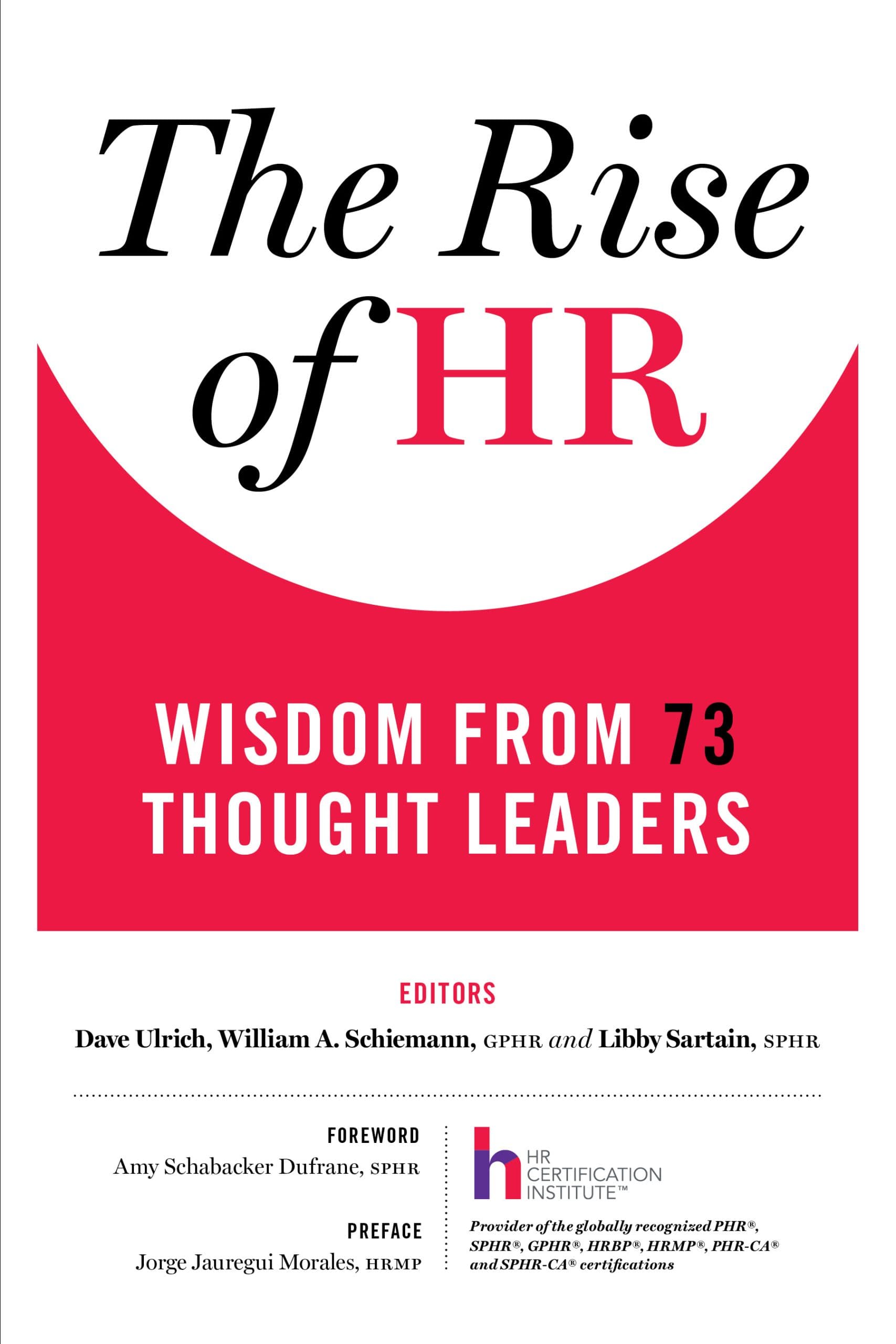
Editor’s Note: This is the first of 12 essays from the new book, The Rise of HR; Wisdom From 73 Thoughts Leaders. It’s compiled by Dave Ulrich, Bill Schiemann and Libby Sartain, and sponsored by the HR Certification Institute.
By Josh Bersin
The human resources profession is at a crossroads.
Over the last few years digital and internet technologies have radically changed the way we work, requiring a tremendous change in all areas of human resources. Our latest global research shows that business and HR leaders have three major challenges:
If we consider HR’s job as the steward of the “people processes” in a company, we have to recognize that almost every part of management, capability building, recruiting, and communication has been radically changed by technology.
How do all these changes impact our profession and the organizations we build in HR? I suggest the changes are profound, important, and exciting.
First, HR teams must become more educated and professionally conversant in the digital world of business. Today’s organizations are flooded with new tools and technologies for work, new ways of working, and a deluge of multigenerational work issues. Old-fashioned HR practices, many of which were developed around the turn of the century, simply have to be reengineered.
Take programs like performance management (only 8 percent of the companies we surveyed believe the time they put into performance management is worth the effort), which is shifting radically away from forced ranking and rating toward an agile, open coaching and development process.
Look at succession management, which is only used by 30 percent or fewer of top executives and fewer than 15 percent of leaders at lower levels. These traditional practices, which were designed to operate in top-down hierarchies of the past, simply do not work well today. We need to reinvent them.
Should compensation be fair and equal or do some people really deserve to make 10 times the rewards of others? Research shows that the latter is true today — the traditional “bell curve” of performance is not even valid, so perhaps our compensation models need to be changed as well.
The HR organization of today is highly enabled and empowered by technology. This means HR professionals must be familiar with software, data, analytics, mobile tools, and all the vendors building innovative solutions.
The days of “HR technology” sitting in the basement running PeopleSoft are over. Today mobile collaboration tools, mobile recruiting tools, and predictive analytics tools are among the most important parts of the HR ecosystem. People in the HR function must feel comfortable with technology and be willing to learn and look at data.
One CHRO told me, “I am no longer hiring anyone into HR who does not have at least a working set of expertise in statistics.” We in HR must be vigilant of new technology and constantly research and study how it impacts the workplace and all our management practices.
Finally, as we reinvent what we do and what we know, we have to reinvent where we spend our time. Technology is now making more and more of the “generalist” function available to people online or through a service center (e.g., managing my benefits, viewing vacation days, etc.). Self-service cloud-based HR technology is what we call a “system of engagement,” meaning it is now designed to let individual employees and managers serve themselves.
This means that HR teams must become business advisors, consultants, and expert specialists in their domain.
Our job is no longer to be a “generalist” waiting for someone to help, but rather a trusted business advisor, trained with excellent skills and connected to what we call “networks of expertise” (not just centers of expertise). Specialists (recruiting, OD, employee relations, compensation) can and should be more embedded and assigned to the business, so they must be networked and share information and skills with one another.
The HR professional of today is more likely to be a talent expert, a technology expert, and a consultant — and less likely to be an OD professional who likes to train and help people.
This is not to say that HR skills are not needed. Today more than ever, HR professionals must focus on three categories of skills:
I believe HR is a “craft” and these skills are learned over time, through apprenticeship, and through study and research. If we think about the talent and technologies now impacting HR, these are difficult roles to fill, so the bar has been raised for everyone in our profession.
And there is no question that the digital transformation of business will continue to accelerate. How we work, what we do, and how computers and data inform and aid our jobs will continue to change over time.
Human resources professionals, as the stewards and experts in people and change practices in the organization, must reinvent ourselves so we stay relevant, valued, and strategic in the organization of the future.
Compiled by Dave Ulrich, Bill Schiemann and Libby Sartain, and sponsored by the HR Certification Institute, The Rise of HR: Wisdom from 73 Thought Leaders is an anthology of essays addressing the critical issues facing business and talent professionals today. The full eBook can be downloaded @ www.riseofhr.com. Reprinted with permission of HRCI.