Advertisement
How One Winning Actress Fueled the Oscars’ Equal Pay Moment

Get articles like this
in your inbox
The longest running and most trusted source of information serving talent acquisition professionals.
Advertisement
Related Articles
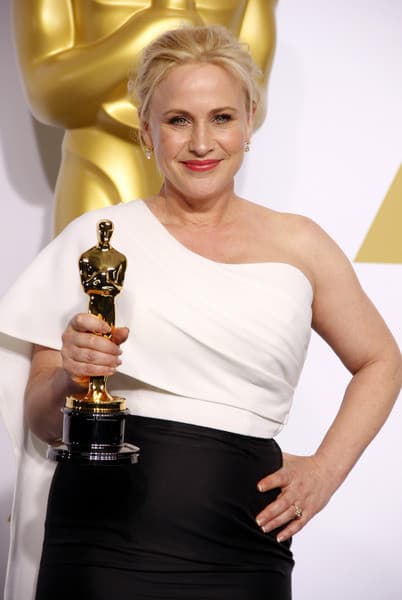
In case you haven’t been on the Internet in the last 36 hours, Patricia Arquette is being celebrated for more than just her Oscar win for Best Supporting Actress in Boyhood.
During Sunday night’s live Academy Awards telecast, the seasoned performer stood up for women everywhere, making a rousing plea to take action about the notorious gender pay gap.
The problem of pay disparity between men and women in Hollywood was already in the public eye thanks to the high-profile cyber-attack against Sony last December.
The hacks made public several internal emails from former Sony Co-chairman Amy Pascal revealing a stark double-standard, chief among them a salary negotiation for the Oscar-winning film American Hustle that saw female co-stars Jennifer Lawrence and Amy Adams settling for 7 percent of profits as opposed to the 9 percent secured by their male counterparts.
It was also revealed that out of the 17 employees at Sony who make more than $1 million per year, only one is a woman, and according to a 2005 audit, 85 out of the top 100 earners at Sony Pictures were men.
Lest you start to feel unsympathetic toward entertainment types making a million or two less, remind yourself it’s about disparity, not gross income. The pay gap is a real obstacle for all the non-Oscar winning women outside Hollywood too.
According to the most recent research from the American Association of University Women (AAUW), women can expect to earn, on average, 78 percent of what men take home.
According to state-by-state analysis based on U.S. Census, Department of Education, and Bureau of Labor Statistics data, they found that the best place for wage equality in America was Washington D.C., where women take home 91 percent of male earnings, and the worst was Louisiana, where the ratio is 66 percent.
Here are some more quick facts:
The good news is that thanks to ongoing activism, awareness efforts, and the occasional rousing Oscar speech, remarkable progress has been made on getting women equal pay, and it’s something we are coming out of rather than running into.
The pay gap ratio for women has narrowed considerably since the 1970s from 57 percent to 78 percent, reflecting women’s progress in education and workforce participation. However, AAUW warns that progress has stalled in the last decade, and that the remaining portion of the gap is unlikely to close on its own.
Here’s what you can do to help:
While Arquette’s acceptance speech was powerful and timely, it took a massive cybersecurity breach on behalf of a major Hollywood studio to even broach the subject in good taste. Hopefully it will help spur a more honest and open dialogue.
While it’s an honor to be nominated, the wins matter, too.
This was originally published on the Michael C. Fina blog.