Advertisement
How KPIs and OKRs Work Together to Achieve Results

Get articles like this
in your inbox
The longest running and most trusted source of information serving talent acquisition professionals.
Advertisement
Related Articles
As an HR manager, when introducing OKRs, your team members almost certainly will ask you what’s the difference between OKRs and KPIs. Do you need them both? In this article, I will show the difference, offer examples and explain how to successfully apply them.
KPI stands for Key Performance Indicator. They are designed to evaluate the performance of the organization, process, or activity. In other words, KPI is your health metric.
Each team or organization can have its own KPIs. Moreover, as the team grows or the market changes, the team would most likely have different KPIs to measure. For example, the potential KPIs of a consulting organization can be revenue, profit, cash in the bank, profit per employee, client NPS (Net Promoter Score), the number of sales-qualified leads, etc.
Most likely, as an HR professional, you’re already measuring several KPIs and monitoring them regularly on the company/team dashboard. It will give you the initial data and create the basis for data-informed decision-making. Typical HR KPIs are turnover, absenteeism, engagement, overtime, training and diversity.
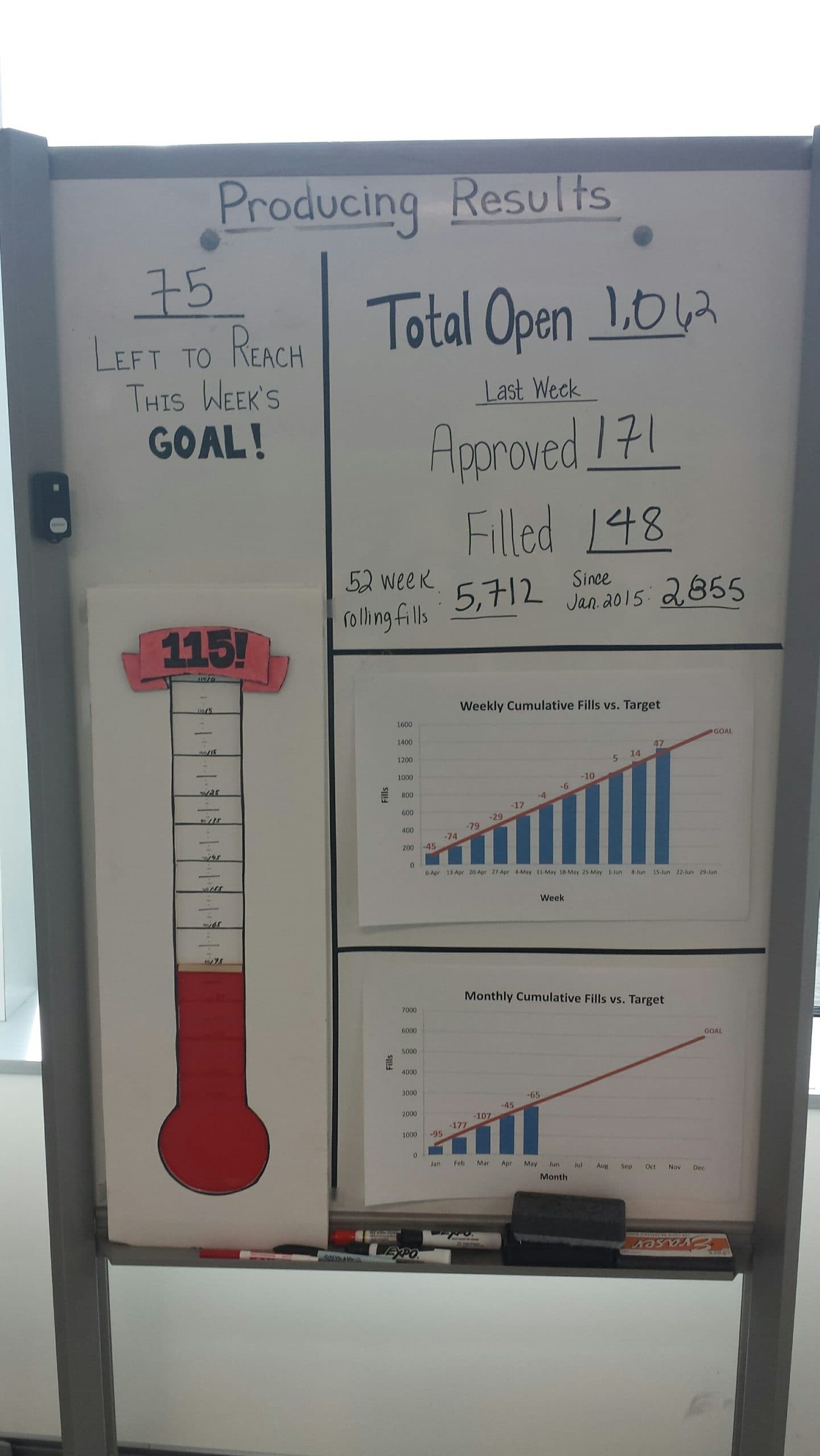
It’s important to emphasize to your team that KPIs are about past performance. They are lagging indicators of how successful your organization is doing. KPIs have nothing to do with the plans.
OKR stands for Objectives and Key Results. It’s a goal-setting methodology that helps companies implement their strategy. OKRs were invented at Intel in the 1970s by Andy Grove and popularized by Google in the 2000s.
The key principles of OKRs are:
Here’s an example:
Objective: Increase team engagement and motivation
Key Results:
OKRs are about future goals. They are designed to align and focus the team towards common objectives, increase transparency, engagement, and motivation.
Now, you might be asking what’s the real difference between OKRs and KPIs? Especially between KPIs and Key Results.
To see the difference, let’s look at an example:
A customer support team has a lot of KPIs that measure their effectiveness: number of tickets, the average time to respond, the average time per call, etc.
When brainstorming the strategy for the next year, management determines to decrease the number of tickets and the average time to close the ticket, saving the company money. This objective becomes an OKR for the next year.
Objective: Increase the efficiency of the support team
Key Results:
Here’s how they might work together for human resources:
The HR team managed created a pleasant atmosphere in the team; the employee retention and satisfaction are excellent. Now they want to focus on education and training.
Key Results:
KPIs to monitor:
Notice that KPIs measure the trend regardless if it’s stable, increasing, or decreasing. OKRs, on the other hand, is about creating a positive change in the metric that the team decides is important right now. KPIs serve the role of monitoring the past performance, and OKRs serve the purpose of achieving the positive shift in the performance. Without KPIs, the organization wouldn’t know what to fix or improve, and without goals or OKRs wouldn’t be able to focus during the given period.
Now you see that KPIs and OKRs do work together. Your organization will most likely monitor several KPIs. And one or several KPIs would become a focus to improve when the team:
Then these KPIs would translate into Key Results under the relative Objectives. As a manager, you need to make sure to communicate this clearly to your team.
When introducing OKRs or KPIs, managers tend to make a widespread mistake of setting too many of them. Interesting that both acronyms have the word “Key” in them. Focus is essential to get the work done. OKRs and KPIs should help you set clear priorities and achieve great results. You’ll need to say “No!” to all the other activities that do not contribute to your top objective. And believe me, it is hard.
Don’t forget it!
Fewer goals will help your team focus on what matters, be more productive, and achieve better results. That’s why it is recommended to have only 1 or 2 objectives per team with up to 5 Key Results each.
The same with KPIs — measure what’s important for the organization, and nothing more. It’s an illusion that the dashboard with 30+ metrics helps to keep everything under control. Everyone gets lost in such amount of data.
Here is a recommended plan on how to make KPIs and OKRs work in your organization:
No methodology is a silver bullet and solves all your problems. Know the benefits of all of them and apply them where they are applicable. Stay on track of how your team is going with KPIs and achieve your strategic goals with OKRs. Your team and top management will thank you for your efforts!