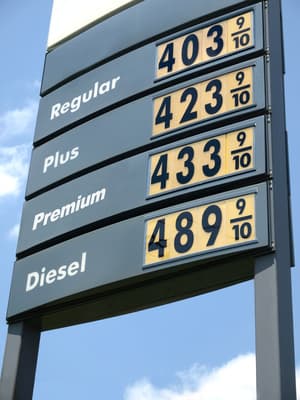
Gas prices have been on the move, increasing by nearly 30 cents in the last month alone. In an interview with The Wall Street Journal, Walmart CEO Mike Duke put the situation frankly.
There is “more pressure today than a year ago” on Wal-Mart’s core customers, Mr. Duke said at an executive breakfast sponsored by The Wall Street Journal.
Customers continue to do heavy shopping at the beginning of the month when paychecks come in, but buying tapers off after that, showing they are already struggling. Consumers are now further pressured by rising fuel costs. Gasoline prices, which are running over $4 a gallon in many parts of the country, “are really having an impact on the consumer,” Mr. Duke said.
While consumer financial health may be the furthest thing from your mind as an HR professional, anyone at your company with a long car commute is going to be impacted by these same pressures. Are you ready for the shift it will produce?
The cost of a commute
If your workplace is like many others, you have some heavy car commuting. And while there is certainly a difference between commuting 20 miles in Los Angeles and commuting 20 miles in Billings, Montana, both of them burn a significant amount of gas every year.
I commuted for about 18 months in the Portland area, and I resisted it heavily. For one, I had to commute on one of the worst stretches of road in the city. The other part is that it was a long commute — 25 miles long to be exact. And while that may not be long in other parts of the country, it was certainly a drive for me. While most days would get me into the office in less than an hour, it wouldn’t get me home within an hour. Leaving work at 5:30 typically meant we could be ready for dinner at 7:00.
While time is certainly a cost, money was also a factor. I was driving during the last gas spike of $4 plus gasoline. Annual gas cost alone was $3,000 at its peak. That doesn’t include things like car payments, maintenance, and insurance. Conservatively, driving that far (and that hard) cost me $10,000 a year.
Of course, I kept that cost in mind when negotiating my initial salary and negotiating further increases. And you can bet the business felt the impact both from the higher salaries required and from the reduced talent pool that resulted from those not wanting to make the drive.
Common solutions that rarely gain traction
When we’ve talked about these issues, the same sorts of ideas come every time: carpooling and transit incentives.
Commuters are feeling the pain at the pump more often as they look for alternatives to driving to work.
Tell me if this sounds familiar: a row of parking spaces closest to the building with signs for carpoolers, right next to the employee of the month and the CEO’s space. Sometimes the company will go beyond that to try to match up potential commuting partners, but most of the time, the benefit goes to the two guys that were already carpooling in because they live next door to each other. These programs often don’t get off the ground very far because the incentive to do it is weak in comparison to the obvious downsides of reduced flexibility and inconvenience.
A transit benefit can be great if you have a good transit system that is easily accessible from your place of business. But if you aren’t getting many people using transit at this point, it is likely that your business isn’t very accessible to transit or that transit isn’t accessible in your city. While the benefit is nice (and works) for places like New York, it probably isn’t going to fly as well in a place like Houston.
A true talent shift
For those looking for long term solutions, might I suggest four key areas to look:
Location – Finding the right city (or cities) with the right talent to locate your business is important but finding the right place in that city (central to your employee base, easily accessible via road and transit) is going to be vital to sustaining a great talent pipeline. I haven’t made a housing decision in the last five years where transit and the location of work hasn’t been an enormous factor in my decision.
Flexibility – Can you offer non-standard hours? Can you offer work from home? If you don’t have a business necessity to be at a particular location at a particular time, this can be a long term solution to a less than ideal (but vested) location option. Being based out of a city with direct flights (or very easy transfers) can make a once a month meeting economically feasible too.
Advocacy – If you’re in a large area that is under-served by transportation infrastructure, it is time to build an advocacy group with other businesses and community groups to build infrastructure that will support a growing commuting population. This can include anything from expanding roads to adding transit options for employees.
Culture – I know that culture change is difficult but this another area that can be critical to success. If you are able (but not internally willing) to offer things like flexibility or explore arrangements that can bring high quality employees into your talent pool, exploring ways of adjusting attitudes might be the last fight. Not only that, having a better workplace can make a longer and more expensive commute more tolerable.
Is your organization looking at ways of helping employees deal with rising transportation costs? From what I’ve heard, it continues to be a topic of consideration but not a top-of-mind thing that must be addressed. If you’re like Walmart’s Mike Duke though, you might be finding yourself adjusting very quickly, too.