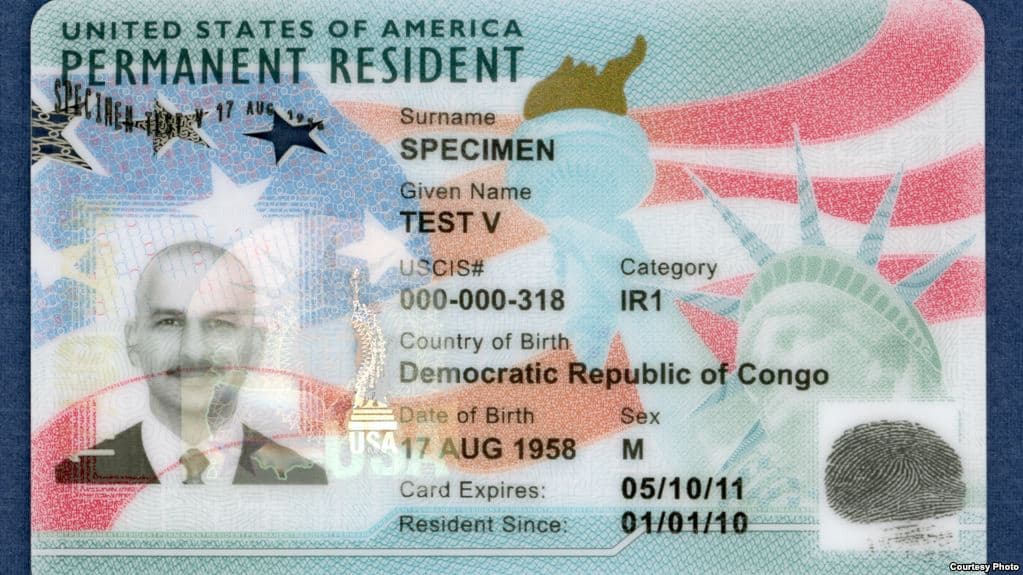
When sponsoring foreign national employees for employment-based “immigrant visas” or “green cards” (which grant lawful permanent residence in the US), there are many factors an employer must consider, particularly when restructuring, relocating or downsizing its operations, to avoid the consequences of noncompliance in the current US immigration environment.
Each situation is unique and must be carefully analyzed. While there are some well-established rules and regulations an employer can use for guidance, the rules are not clearly defined and there is currently no certainty as to the government’s response.
For example, in an effort to strategically reduce its operations, a US employer may consider moving its main office to another country and keeping a virtual office in the U.S. How would this affect the status of its foreign national employees with labor certifications and/or immigrant worker petitions still in process?
From a U.S. immigration perspective, this situation could be problematic because the employer may no longer maintain actual levels of U.S. systematic and regular business, workforce, and presence stated at the time the green card applications were filed (most immigration forms have the strength of sworn statements).
Indeed, instead of growing, which is necessary to justify the granting of lawful permanent residence applications, the U.S. Citizenship and Immigration Service (USCIS) may view this as the company slowing down its business growth, reducing personnel, and minimizing its presence, making granting green cards less certain and open to government challenge. Further, at the time of granting the green cards, the employer’s business activities may have been reduced or even “barely” able to justify the employment of foreign nationals by complying with the minimum acceptable requirement.
Minimum operations required
In order to continue the employment relationship with foreign national employees with green cards in process, an employer MUST maintain its operations as documented in the initial filing and must maintain an appropriate employment relationship with the foreign national employees.
With regards to the permanent residence process, an employer is still expected to file substantive applications on behalf of the employees and the employees will be subjected to an in-person interview with USCIS. As part of the interview process, the employee will be required to confirm the nature of his employment and answer questions to confirm the company is operating as documented in the filing. It is important that the employer remembers the promises they made in connection with employment for positions which are “permanent.”
What you need to show
Specifically, to continue sponsorship of the green cards after restructuring, an employer must demonstrate the following:
- Hold a “qualifying relationship” with a foreign company. The employer’s legal structure must remain active and in compliance with US regulations and remain connected through a legal relationship (affiliate, subsidiary, parent, branch, etc.) with another employer company outside of the US;
- Continue “doing business” as an employer in the US and in at least one other country, directly or through a “qualifying organization,” for the duration of the beneficiary’s stay in the US or until after the sponsored employee obtains the green card. “Doing business” in this context is defined as the regular, systematic, and continuous provision of goods and/or services by a qualifying organization.
- Show “ability to pay the proffered wage” at the time of the priority date (established by the date of filing of the Labor Certification PERM). The demonstration of financial ability must be from “the time the priority date is established and continuing until the beneficiary obtained lawful permanent residency. The employer will be required to produce evidence in the form of its annual report, tax return or audited financial statement.
- Show that the “alien is qualified for the position,” meeting the minimum requirements for the job, and that it is performing the job for which he or she was petitioned. The foreign national employee must have all the education, training and experience specified in the job offer at the time of first filing the Labor Certification PERM or I-140 where no labor certification is required.
- Show evidence required, which, under the present US immigration environment, means detailed and extensive documentation, even when the employer is a well-established company. Therefore, the employer should be prepared to provide detailed and extensive documentation to establish its ability to continue sponsoring the green cards;
- Maintain the employment of the sponsored employees in keeping with the statements made on the I-140 and/or labor certification filings including job duties, work locations, and payment of wages in the amount equal to or greater than documented in the filings.
The requirements above are the “bare minimum” acceptable requirements in the hope that if complied with, and given legal experience, could permit the continuation and final approval of the currently pending green card applications.
No insurance
However, these are no insurance against the triggering of future government inquiries and audits and investigations, which could lead to the sharing of information with other agencies (i.e. IRS, USDOL, etc.) and could result not only in the denial of the green card applications, but also bring about other serious consequences. Further, employers sponsoring H-1B and L-1 petitions can trigger visits from the Fraud Detection and National Security (FDNS), a unit of USCIS.
Lack of compliance with these requirements could also deny an employer’s ability to respond positively and provide evidence necessary to overcome potential Notices of Intent to Deny, Requests for Evidence, and significantly impairs its ability to appeal potential denials.
These are only a few examples of potential consequences. Ultimately, investigations and audits could also lead to more problematic issues such as monetary penalties of all types, civil charges, etc. Through these uncertain times, it is extremely important that the employer retains an experienced immigration lawyer to guide them through this process.
In summary, in order to continue permanent lawful residence sponsorship for key employees through and after downsizing or restructuring operations, it is strongly recommended that the employer continue operating the business, which includes keeping a functional and operational office location open; maintaining personnel in the office with an active payroll; continuing to conduct business regularly and systematically; remaining compliant with the terms of the I-140 and labor certification filings; and be fully compliant with the law.