Advertisement
False Expectations: A Millennial’s Guide to the Working World
Get articles like this
in your inbox
The longest running and most trusted source of information serving talent acquisition professionals.
Advertisement
Related Articles
By Aaron McDaniel
Whoever ceases to be a student has never been a student — George Iles
The only source of knowledge is experience — Albert Einstein
I was three months into my first job out of college and I was facing the event that each year strikes fear into the hearts of employees across the country. It was time for my first performance review.
Whereas many people are scared of having to face their boss and get (often critical) feedback about how they do their jobs, I, on the other hand, was excited.
Even though I had only been in my position for a short time, I felt I really had a handle on what I was doing. I had made an effort not to bother my boss with a laundry list of silly questions.
Instead I relied on my peers and others in the office to teach me the systems I needed to use and the processes I needed to follow to fulfill my job responsibilities. I felt as though I was on the road to quickly mastering everything.
As I walked into her office I was expecting fireworks. I envisioned my boss talking about how all the work I had done was above and beyond what she expected. She would follow up by offering me a sizable raise, letting me know I was on the fast track to a promotion.
I sat down, and she began to go through my review. The first words that cut through the shuffling of chairs and paper were wildly different from what I expected: “Aaron, I’m just not sure that you really ‘get it,’” she stated, followed by a long pause. “You appear to be a sharp young person but I rarely receive any feedback or questions from you, so I am not sure you really even understand how to do your job.”
I was stunned. Her words still sting today.
In that moment, it become abundantly clear that despite all the time and effort I spent learning my job and working to impress my boss, I had committed one of the deadly sins that many of us commit when starting our careers: I failed to take the time to understand my boss. I didn’t make an effort to connect with her and learn how she preferred to communicate and be communicated to.
My response to her statement, which escapes me because I am sure it was a mumbled mess of excuses, could not undo the damage I had done.
This was the first situation in my young career in which I realized beyond a shadow of a doubt that SCHOOL DOES NOT PREPARE YOU FOR YOUR CAREER.
There is no course offered in college that teaches you how to interact with an executive asking you to complete a project. There is no textbook that outlines the steps you need to take to build a strong reputation and earn a solid promotion.
Some of us come from backgrounds such that our family members didn’t teach us about the corporate world because they had no corporate experience themselves. Some clubs and extracurricular activities may have taught us applicable skills, but we have almost no reference points to know how to be successful in the workplace.
Corporate leaders realize that we are different from previous generations. They see Millennials (or “Gen Yers,” or whatever they want to call us), as more than just texting, tweeting, Facebooking young employees; as the future of their businesses. Because of this, corporations are finding ways to adapt for us. They are leveraging social media to recruit and are testing out new work models that appeal to our generation.
Corporate culture shifts are a great first step, but corporate planning only addresses half of the issue at hand. Many words have been associated with corporations, but the words agile and quick are not often among them. Change within companies takes time. Companies are not going to transform into familiar places for Millennials to grow and thrive.
What’s more notable is that a gigantic gap exists in the corporate world today. Corporate leaders are not dedicating enough time and resources to teach young professionals as individuals how to be successful in the current corporate world. Whereas many companies have comprehensive orientation conferences and assign mentors to new employees, most do not give each young professional the tools needed to understand how to maneuver complex corporate environments.
This leaves most of us with one option: to figure it out on our own.
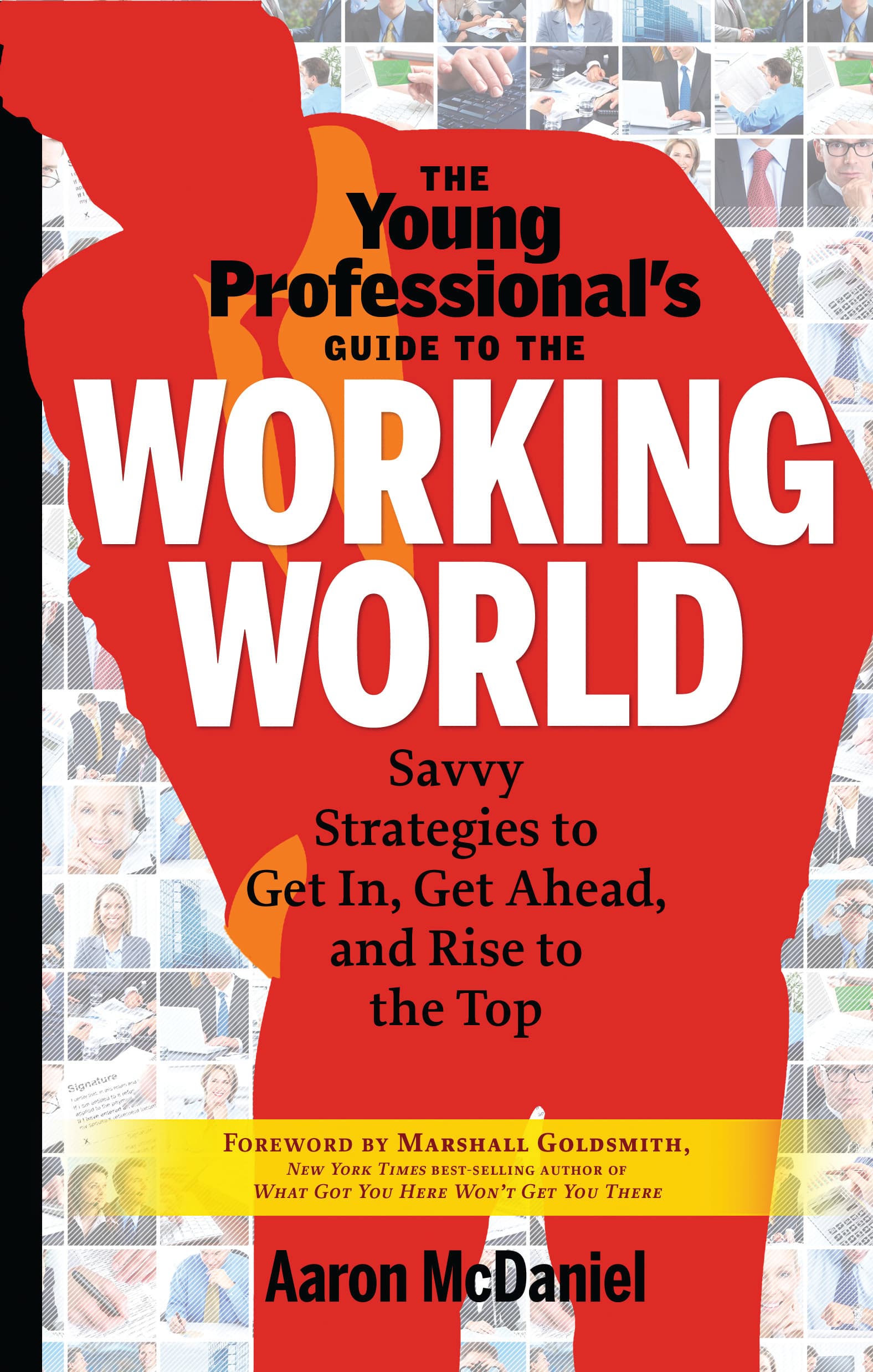
It has been said that you never truly learn a lesson until you experience it yourself, but there is a better way. Enter The Young Professional’s Guide to the Working World. This book contains lessons (six years in the making) from my career. By successfully applying the advice you are about to read you will be ahead of your peers, no matter how many years of work experience you may already have.
Because there aren’t any courses on how to build a successful career, it is important to understand what the corporate world is and what it is not. Here are some of the expectations I had entering the corporate world that were completely false:
Now that we’ve proved some of my grandiose visions (and maybe some of yours) wrong, let’s talk about some brutal truths about the working world that I learned the hard way.
Although we don’t always have control over our careers, we can take ownership of our career path. We can seek mentors and work on being a constant learner (a mentor of mine calls this continually “sharpening your sword”). We can develop new skills and proactively seek challenging career opportunities that will stretch us to perform at a higher level.
You are already taking the first step in “sharpening your sword” by reading this book. A good second step is to leverage the peer mentorship and other resources available at YPEdge.com where you can interact with other young professionals and learn key advice from experts in the field.
Here’s why you should read on: SCHOOL DOES NOT PREPARE YOU FOR YOUR CAREER.
As you begin your career and start building a foundation to support the next 40 years of work you have two options:
By nature, we learn lessons through personal experience. Although this is one of the most effective ways to learn, I encourage you to learn from my mistakes and the mistakes of others instead.
Mistakes can be helpful, but also painful. I want each of you to be successful in your careers while keeping career-limiting mistakes to a minimum.
Reprinted with permission of the publisher from Young Professionals Guide to the WORKING WORLD, copyright 2013 Aaron McDaniel. Published by Career Press, Pompton Plains, NJ. 800-227-3371.
All rights reserved.