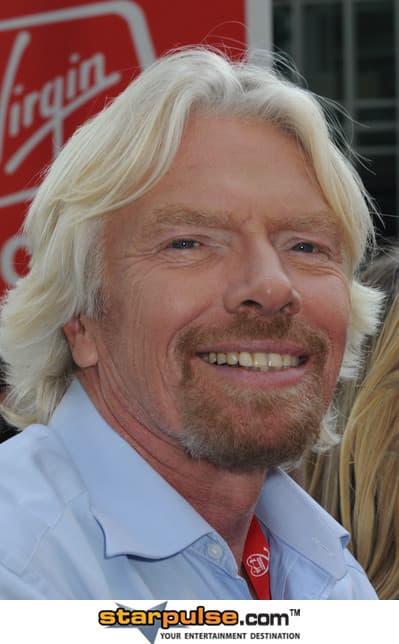
Here’s how I measure the quality and usefulness of general session speakers at the annual SHRM Conference and Exhibition each year: it’s all about HR and managing talent.
Yes, if the big-time speakers that SHRM lines up (and pays a nice chunk of change to) can get up and talk about what is most important to HR professionals — how to better manage their organization’s talent — then they are useful and a success.
By that measure, Al Gore and former GE CEO Jack Welch (who spoke in 2009 and 2010, respectively) were big hits at SHRM. Others, like Lance Armstrong, Colin Powell, Steve Forbes, and Queen Noor, well, not so much so.
Sunday’s Opening General Session speaker — Sir Richard Branson of Virgin Atlantic (and Virgin everything else) fame — sort of met my criteria for a good speaker. Yes, he talked somewhat about HR and talent management (and the importance of it), but he gave his advice a la Jack Welch. That is, in a Q&A session (no stump speech for him!) with longtime SHRM conference host Juana Hart Akers asking the questions.
Sir Richard’s Q&A approach
I’ve heard Branson give a stump speech before (at a World Business Forum event in New York several years ago) and he was, well, fairly dry and dull. The Q&A approach he used here at SHRM Las Vegas suits him much better, as Jack Welch clearly learned so long ago.
Branson has been a hugely successful entrepreneur and businessman, and he has a strong social conscience as well. He touched on a number of topics in his presentation, but here are a few that resonated with me:
- On hiring talent for his Virgin Atlantic airlines: “For each person we hire, 400 apply … In the airlines, if you can get everything right (for both customers and employees) … everyone will be cheerful and happy … ands it doesn’t cost that much more.” Customers compliment the employee when the business is well-run, “and then (the employee) enjoys the job more and you then get more great people” applying to come work for you.
- When asked if all his ventures have been successful: “You wouldn’t be a proper entrepreneur if everything was a success … you need to get out there and try things.”
- On providing workplace flexibility for workers in a 24/7/365 world: “Workplace flexibility is critical for success, but American companies are particularly bad at it … many of your workers would like more flexibility — job sharing, part-time employment, a six-month leave of absence … and the number of holidays people are given in America stinks. It’s horrendous.”
- On offering rewards and incentives to employees: “All these HR departments can offer a prize to their staff by sending them into space (on Virgin Galatic) … or offer a one-way trip for their CEOs!”
- On building a socially conscious business: “Every company should be a force for the good … to really inspire your staff and customers (his non-profit socially-conscious organization is Virgin Unite). If you leave it to government’s to solve it … they don’t have an entrepreneurial way to tackle (social problems).”
Although I would have preferred a stump speech focused a lot more on the talent management successes and challenges he has experienced with his Virgin companies, or a Q&A session that zeroed in on topics of high value to HR, Branson’s session kicking off SHRM Las Vegas was better than most even if it wasn’t quite up to what Gore or Welch has done at past conferences.
Overall, I’d give Sir Richard a “B.” For a SHRM conference general session speaker, that puts him in the top 20 percent of the class.
SHRM/Globoforce employee engagement survey
Employee engagement is a hot topic — probably because so many companies are struggling with it post-recession — so that’s why this survey released last week got my attention.
The 2011 SHRM/Globoforce Employee Recognition Tracker Survey released just before SHRM Las Vegas (and getting some discussion at the conference) found that “nearly all HR leaders surveyed (99 percent) anticipate employee engagement being a key challenge they will face, yet non-strategic engagement and recognition programs continue to pervade companies.”
Not so surprising (at least to me) is this — that “while 86 percent of companies track employee engagement scores, a startling 71 percent of those same respondents track engagement levels via employee exit interviews. This means companies are only learning about engagement issues at the time employees voluntarily.”
Some of the other findings:
- 54 percent of HR leaders do not think managers and supervisors at their company effectively acknowledge and appreciate employees;
- 69 percent believe employees are not satisfied with the level of recognition they receive at work;
- 44 percent of respondents do not think their employees are rewarded according to job performance;
- Only 37 percent of HR leaders said they tie employee recognition programs to corporate values;
- Less than half — 43 percent — recognize employees based on performance related to the organization’s financial goals.
“Our first survey shows companies put engagement at the top of the priority list yet fall short in aligning these programs at the strategic level,” said Eric Mosley, CEO of Globoforce, a global provider of of SaaS-based employee recognition solutions, in a press release about the survey.
” Measuring recognition adds a level of accountability for all employees, and is ultimately how behaviors change and culture is actively managed. It’s also how today’s HR leaders can gain the much-needed support and investment from senior management for strategic engagement and recognition programs.”
These results, taken from responses from more than 700 HR leaders and practitioners, confirm much of what we keep hearing, because they show that when it comes to engagement, organizations would rather talk about it instead of really do what it takes to make it a a integral part of their talent management operation.