Advertisement
A Step-by-Step Guide to One of Management’s Most Difficult Duties
Get articles like this
in your inbox
The longest running and most trusted source of information serving talent acquisition professionals.
Advertisement
Related Articles
By Dick Grote
The performance appraisal may confirm that the individual and the organization are so mismatched that termination is the right answer. Or, during the course of the year, the person’s failure to respond sufficiently to the manager’s coaching, or his commission of an unacceptable offense, may cause the need to terminate.
Any termination must be carefully planned, with the heavy involvement of HR if this assistance is available. But the responsibility for deciding on the termination, and the delivery of the news, is the job of the manager and not that of the HR rep.
To begin, waste no time with small talk or anything other than the job at hand. In the movie Jerry Maguire, Jerry’s peer, a sleazy sports agent named Bob Sugar, takes him to lunch with the purpose of firing him.
While he’s portrayed in the movie as a slimeball, Sugar does one thing right: he gets right to the point. He leads with a clear statement of the bad news he has to deliver: “I’m here to fire you, Jerry,” he states within a minute of their sitting down. As HR expert Kris Dunn notes, when you’re delivering bad, life-changing news, clarity is your friend. The confusion related to small talk is your enemy.
Here’s a brief, step-by-step guide to one of leadership’s most unpleasant duties.
Be fully prepared to deal with all of the questions that invariably arise at the time the termination is announced — this is one time you won’t be able to say, “I’ll get back to you on that.” Make sure you have answers to questions like these:
The termination meeting should be brief — 10 to 15 minutes is usually sufficient. People always want more. You can talk for hours to no benefit. If possible, schedule the termination early in the week so you don’t give the person the weekend to brood about it.
In your discussion, don’t attempt to justify or defend the decision. Stick to what you know for sure. You don’t know, for example, that an employee who has failed a drug screen is a drug user or an addict. What you do know is that his drug screen was positive.
Make sure the person has heard the termination news clearly, but avoid any personal attacks, accusations, or justifications (“You should have known . . .”). And certainly don’t tell the employee that this is difficult for you. The employee would gladly change places.
Termination is undoubtedly one of the most disliked requirements of being a manager. But the termination of a marginal employee, if handled compassionately and maturely, will only generate relief from those who have had to put up with drones and deadwood, slackers and dedicated free-riders, without being able to take action.
And remember — it’s not the people you fire who make your life miserable. It’s the ones you don’t.
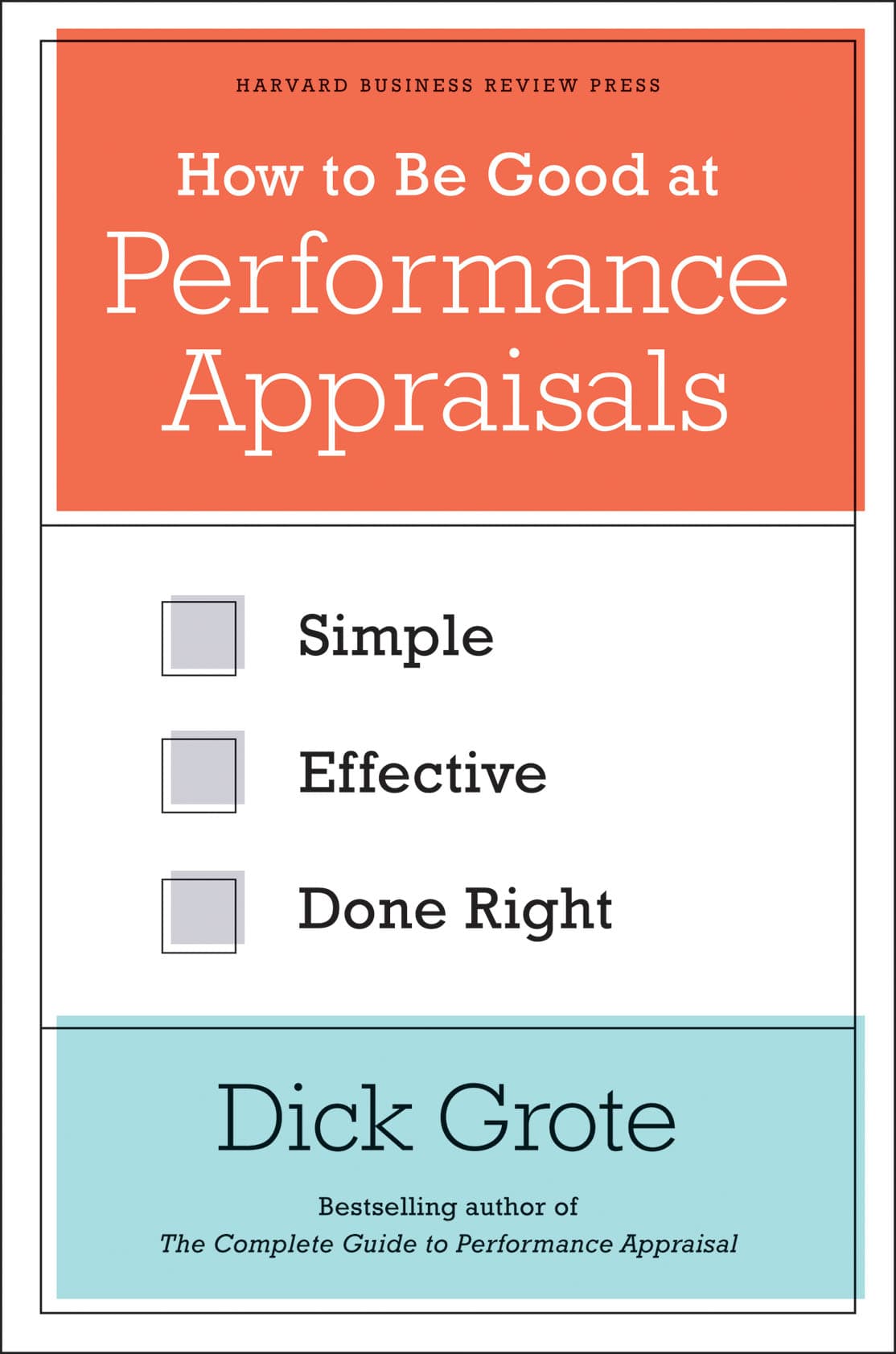
Excerpted from How To Be Good At Performance Appraisals: Simple, Effective, Done Right by Dick Grote. Reprinted by permission of Harvard Business Review Press. Copyright 2011 Dick Grote. All rights reserved.