Recently, Jennifer Vecchi wrote an article here at TLNT on employee happiness/engagement. In it she wrote, “… employers believe that a happy workforce is a more productive workforce …”
I want to take that up a notch and talk about “happiness” at the country level —- notably one country wanting to create happiness for its citizens.
Bhutan is a country nestled high in the Himalayas between India and China. It generally prefers to cut itself off from the outside world, and visas for foreign tourists are strictly rationed.
It is among the poorest and least developed countries in the world. With a population under 800,000, the average income is about $110 per month.
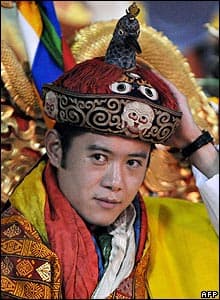
In 1972, the 17-year old King of Bhutan asked a shocking question, “Why are we so focused on Gross Domestic Product (GDP)? Why aren’t we more concerned with Gross National Happiness?”
What gross national happiness is
It’s been 40 years since that question was asked and Bhutan has been remaking its country based upon the premise that the ultimate public good a leader can provide his or her people isn’t material possessions, but happiness and well-being.
On the other hand, Gross Domestic Product (GDP) is used today by countries to measure their economic health. As reliable as it is GDP really only measures one thing — money.
For some this is the best indicator to focus on. Others believe there are more important things to consider than money — like happiness.
How GNH is measured
The Bhutanese have created a science behind the art of happiness. They have created a test for Gross National Happiness (GNH).
They measure four pillars, nine key indicators, and 72 various metrics to help them understand whether they are creating the right conditions for happiness. Wow! Maybe we could learn a thing or two from them about metrics!
Some of the key indicators to happiness include: physical, mental and spiritual health; time-balance; social and community vitality; cultural vitality; education; living standards; good governance. Time-balance, for example, takes into account the amount of time workers are able to spend with their families or in leisure activities.
Time/balance = work/life balance. Sound familiar?
They have developed questionnaires, used in regular polls of the Bhutanese people, by which they assess life satisfaction in each of these areas. Bhutan then uses the results of these questionnaires to guide public policy.
The GNH “movement”
For the past three decades, this belief that well being should take preference over material growth has been a global oddity. Countries chuckled and dismissed it as “Bhutanese economics.” Now, in a world of financial uncertainty, tiny Bhutan’s approach is attracting a lot of interest.
Some 40 national governments are studying or adapting the BNH Index to understand how they can create conditions for their people to have greater well-being. In France, a government commission is looking at indicators that include walking, reading and the frequency of love making! Leave it to the French!
In 2011, the United Nations adopted Bhutan’s call for global well being — a move endorsed by 68 countries. A UN panel is now considering ways that Bhutan’s GNH model can be replicated by countries across the globe.
3 lessons for business leaders
- Leaders don’t create happiness. Is a business with a healthy, happy culture more likely to elicit higher revenues than one with a negative culture? Is a business with a happy culture more likely to have lower employee turnover, higher customer satisfaction, and ultimately higher sales? I think those guys in Bhutan are on to something – maybe increasing GNH can have a direct economic impact. The Prime Minister of Bhutan says his goal is to create the conditions in which happiness can flourish. Great leaders create healthy habitats. Healthy habitats create results — whether it’s “engaged/happy” employees or a profitable business. Company leaders need to decide what cultural habitat they want and what kinds of specifics can be done to create that habitat.
- Leaders need to value and measure the intangibles. The Bhutanese use their GNH tool to help them understand whether they are creating fertile conditions for happiness. These conditions are intangible. Business leaders need to distinguish between the “tangibles” they can easily count (money, parties, etc.) and the “intangibles” which employees may value more (visible appreciation). What you measure matters. Sometimes, you have to adapt your measuring tools to measure the intangibles that truly define success.
- Leaders need to be willing to differentiate. If you’re a small country or a small company, the best strategy to compete with competitors is to find a niche and own it. It took thirty years for the world to embrace Bhutan’s approach to GNH, yet this “happiness niche” has turned out to be much larger than the King of Bhutan ever imagined.
The Bhutanese have got the happiness niche down to a science. Evidence? There reportedly is only one psychiatrist in the country!