So, that’s it!
Goodbye 2023. Hello (almost) 2024.
But, as another year passes, what will be on HR professionals’ agendas for the coming year ahead?
Well, to say there’ll be a lot on HR’s plate in 2024 is probably an understatement.
The big macro-level event will – of course – be the presidential election at the end of the year.
Depending on the result, HR policies could well need re-writing, but ahead of all this, all the signs indicate there are more pressing concerns afoot – such as a predicted small, and slight recession. This will happen, argue experts, despite there being a red-hot labor market that’s still showing two job openings for every unemployed worker – the most since the 1950s.
But even if a recession still seems somewhat distant, 2024 will start much like 2023 did – with the ever-present concern about what HR should prioritize next, and whether this is what the CEO wants or what employees actually want.
And arguably this uncertainly is getting worse!
Talk to HR professionals – as Gartner recently has – and it will tell you that leader and manager development and organizational culture are the top priorities on HR leaders’ minds for 2024 – but the answers HR folk seek will not be clear-cut.
Why? Gartner argues that the key trend for next year will be what Mark Whittle, its vice president of advisory in the Gartner HR practice calls an “unsettled employer-employee relationship” – one that he argues will be characterized by “persistent skills shortage, transformative technology innovations and pressure to achieve operational efficiencies.”
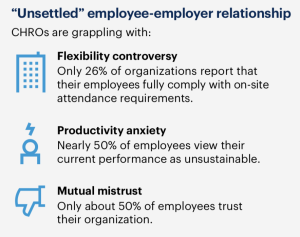
This unsettledness was maybe why 2023 was characterized by so many high-profile strikes.
But according to Gartner, the issue was also about skills. It found 82% of the HR leaders it questioned thought managers were not equipped with the skills/tools they need to lead the change they need to do to get their organizations through 2024.
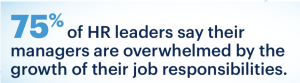
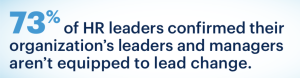
That’s tough, but to remedy it Gartner argues HR also needs to think outside of the box too – and not simply defer to spending more on development.
While skills investment always sounds like a very HR thing to do in response to a perceived skills problem, HR must resist this urge Gartner argues.
Says Whittle: “Providing managers with more training or more skills does not increase their effectiveness.” He adds: “Instead, organizations must focus on job manageability – making the manager job more manageable.” He adds: “Making the manager job more manageable is five times more effective than skills proficiency in improving manager effectiveness.”
Peter Ayken’s Gartner’s chief of research has even more to say on the matter – claiming “the road to a new model of work, leadership and employee engagement has been a bumpy one.”
He says: “In 2024 HR will combat opposing viewpoints when it comes to the value and importance of flexibility, productivity anxiety, a transformation deficit and pervasive sense of mistrust between employees and employers. HR must,” he says: “consider this current state in planning for broader organizational initiatives.”
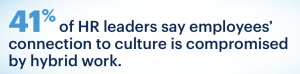

Perhaps this message is a sort of rallying call in general for HR professionals to heed the year ahead.
Essentially it’s a plea to the profession NOT to default to what they’ve always done (for doing the same thing expecting different results is….well, the definition of madness) – but instead to think around the problem, and come at things from a new, potentially different perspective.
It won’t be easy. Just below leader and manager development and organizational culture in HR’s top priorities for 2024 is HR technology in third place, followed by change management and career management and internal mobility.


The latter may become increasingly important as HR professionals battle trying to maintain employees’ sense of career progression at a time when there may be limited roles to promote/move them in to.
So what else can we be certain will appear on most HR’s to-do lists in 2024?
Read Part 2 of our preview of 2024 tomorrow to find out.
In the meantime, here’s our round-up of happened this year:
2023: An HR Year in Review:
January:
- 18th: The US Virgin Islands legalizes marijuana, becoming the third US territory and 25th US jurisdiction overall to do so.
- 19th: Trade union membership is reported to have hit an all-time low in US dropping from 10.3% to 10.1%
February:
- 3rd: Recreational cannabis sales begin in Missouri
- 23rd: Syndicated Dilbert comic strip – which often takes an irreverent look at the workplace – is dropped by many newspapers, including the LA Times and Washington Post
March:
- 8th: Minnesota governor Tim Walz signs an executive order to protect gender-affirming healthcare
April:
- 14th Montana becomes the first state to pass legislation banning TikTok on all personal devices from operating within state lines and barring app stores from offering TikTok for downloads
- 23rd: Delaware legalizes recreational marijuana
May:
- 2nd: The 2023 Writers Guild of America strike begins due to unsuccessful pay raise negotiations
June:
- 29th: The Supreme Court rules that affirmative action in university admissions violates the Equal Protection Clause in the 14th Amendment.
- 30th: The Supreme Court rules in a 6–3 decision that the First Amendment prohibits states from forcing website designers to create designs they disagree with.
July:
- 5th: Meta Platforms launches Threads as a direct competitor to Twitter.
- 11th: Bank of America is ordered by the CFPB to pay $253.4 million, including a $150 million fine, for deceptive practices and misuse of overdraft fees
- 14th: SAG-AFTRA begins an ongoing strike after the national board failed to reach an agreement with the Alliance of Motion Picture and Television Producers, bringing Hollywood to a standstill for the first time since 1960 with the ongoing writer’s strike
August:
- 11th: The United States reports it recorded its highest number of suicides in 2022, with 49,449 people taking their own lives, making it the deadliest suicide rate in the country since World War II
September:
- 15th: The United Auto Workers begin a strike against the big three American automakers of Ford, General Motors, and Stellantis
- 21st: The national debt is reported to have risen to $33 trillion
- Media mogul Rupert Murdoch announces his retirement and plan to hand off his businesses, News Corp and Fox, over to his son Lachlan
- 26th: The FTC and 17 states file an antitrust suit against Amazon for monopolistic practices
- 27th: The WGA Strike comes to an end at 12:01 AM PDT after a tentative agreement is reached three days earlier
October:
- 17th: Detroit casino workers call the first strike in their history after failing to reach a deal with MGM Resorts and Penn Entertainment
- 8th: California Governor Gavin Newsom vetoed Senate Bill (SB) No. 731. If enacted into law, SB 731 would have required employers to provide at least 30 calendar days’ advance written notice before requiring employees working from home to return to work in person
- 8th: Governor Gavin Newsom vetoed Assembly Bill (AB) No. 1356 which would have required employers to provide workers with earlier notice in the event of a mass layoff.
- 30th: The UAW reaches a tentative deal with General Motors after making tentative agreements with Stellantis and Ford, officially ending the strike
November:
- 6th: WeWork, once the most valuable U.S. startup, files for Chapter 11 bankruptcy with liabilities of up to $50 billion
- SAG-AFTRA ends its strike at 12:01 a.m. PDT following a tentative deal reached the day prior
- 17th: Sam Altman, CEO of ChatGPT developer, OpenAI, is fired for reportedly lying to the board. Less than 72 hours later he is back following a staff revolt
December:
- 8th: The US economy added +199,000 jobs in November, exceeding the 187,000 median forecast in a Bloomberg survey of economists.
- 18th: The unemployment rate is revealed to have fallen from 3.9% to 3.7%. The labor force participation rate remains unchanged at 62.8% (the same since August)